CCCA Writing Workshop

Communicating Science Successfully

Cut, cut, cut!

Less is often more. This applies to press releases on scientific topics as well. Scientific authors tend to favour long and convoluted sentence constructions that create more confusion than clarity — which is why the very first writing tip, "Cut, cut, cut!", tackled this phenomenon.

"The writer (...) must constantly ask: what am I trying to say? Surprisingly often they don´t know." (William Zinsser in "On Writing Well")

There are significant differences between academic writing style and the kind of style that journalists and media outlets prefer to work with, and researchers are often only practised in academic writing. That's why Florian Skrabal and Georg Eckelsberger (DOSSIER) have analysed the media-effective communication of research projects and put together the best tips and tricks specifically for researchers.

How long can a press release be and still get read? What kind of content grabs the attention of the press? When's the best time to get in touch with a journalist?

Further information about the trainers and DOSSIER can be found here.
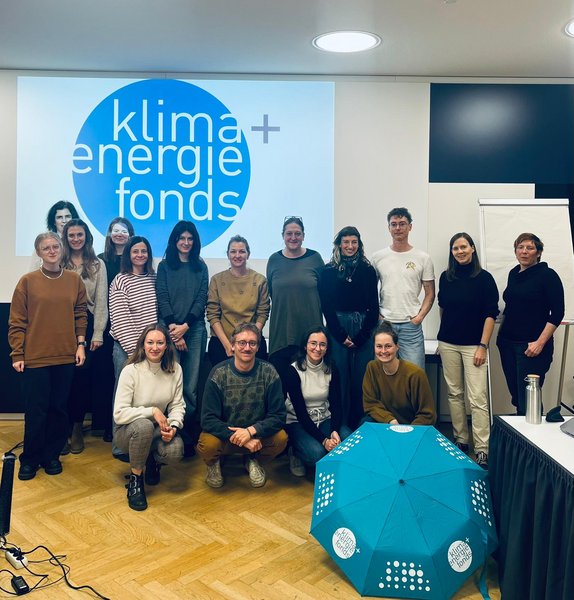
Looking back at the 9th CCCA Writing Workshop (13+14.11.2025)

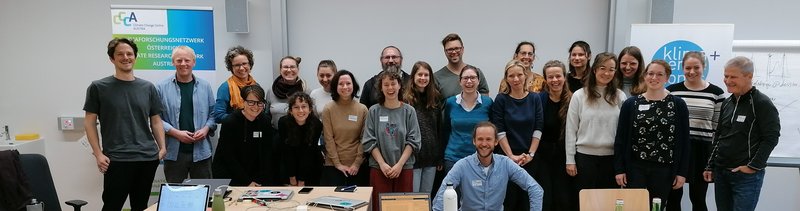
How can complex knowledge be communicated in a way that's clear, memorable, and relevant to different audiences? That question was at the heart of the 9th CCCA Writing Workshop, held this year at the University of Vienna. Over two days, participants worked together with journalists from DOSSIER to explore how scientific content can be transformed into plain language, accessible formats, and compelling stories. Because the key insight holds true: clear language and well-structured sentences not only help to improve readability, but also make texts accessible to a broader audience.

Right from the start, participants dived into the fundamentals of storytelling and journalistic writing. What quickly became clear: good science communication has a lot to do with precision, structure, deliberate language choices, and a captivating story.

Nora Gau from the ECH, University of Vienna, also gave a brief insight into her work at the interface between science and the public. A live link-up with Arno Scharl (webLyzard) opened up a fresh perspective on AI-supported text work using the Storypact Editor. Following an overview of further useful tools for text revision, the focus shifted to texts submitted in advance by participants. Individual text examples were discussed, analysed, commented on, and revised together — always with the aim of formulating scientific content in a way that's understandable without losing depth.

On the second day, the focus shifted for the first time this year to the topic of social media. Starting from the question of how to reach people beyond one's own specialist community, participants worked out how different platforms function and which target audiences can be reached where. Canva and CapCut were introduced as practical tools for preparing and presenting content. Particular attention was also paid to accessibility — for instance, high-contrast visuals and plain language.

To wrap things up, a heartfelt thank-you goes out to all the enthusiastic participants and to all the speakers! We'd also like to once again thank the ECH for the delicious vegan bagels during our lunch breaks!

8th Writing Workshop, 17+18.10.2024

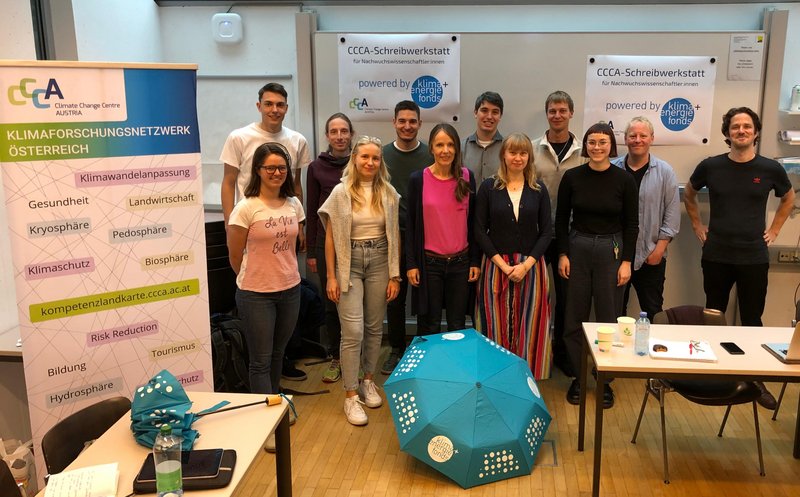
This year's CCCA Writing Workshop "From Papers to Press" was once again a great success. 12 participants from various research institutions made the most of the two days in Graz to sharpen their science communication skills. The experienced journalists from DOSSIER shared practical tips and tricks for making complex scientific topics understandable and engaging for the general public. After a brief introduction to storytelling and the basics of journalistic work, participants revised their own texts collaboratively with the journalists and fellow attendees. 

A big thank-you goes to the Climate and Energy Fund for funding the event! We're already looking forward to the next CCCA Writing Workshop and warmly invite all interested early-career researchers to join us!

7th Writing Workshop, 26+27.09.2023 in Innsbruck

How do we successfully get scientific findings "From Papers to Press"? That was the theme of the two-day CCCA Writing Workshop by the Climate Change Centre Austria in cooperation with Dossier and the University of Innsbruck. On the first day (26.09.2023), the experts from Dossier kicked things off with journalistic input (theory & fundamentals of journalistic work, storytelling), and in the afternoon the group worked together on participants' texts. On 27.09.2023 from midday, we turned our attention to the research field of science communication: this included a talk with discussion by Melanie Bartos from the Press and Public Relations Office of the University of Innsbruck (UIBK).

The Dossier experts also shared concrete information and tips on writing press releases and approaching journalists. Particularly enriching was the transdisciplinary exchange — not only between science and journalism, but also with a number of activists from the press team of Fridays For Future. As always, a big thank-you goes to the Climate and Energy Fund for funding the event. The 7th Climate Writing Workshop was a thoroughly successful and inspiring experience for all participants!

6th Writing Workshop, 21+22.09.2022 in Vienna

Following strong interest in a longer writing workshop in previous years, the 6th CCCA WRITING WORKSHOP took place for the first time over two days — Wednesday, 21 September, and Thursday, 22 September 2022, from 10:00–17:00 each day — at BOKU in the Ilse Walentin Building in Vienna.

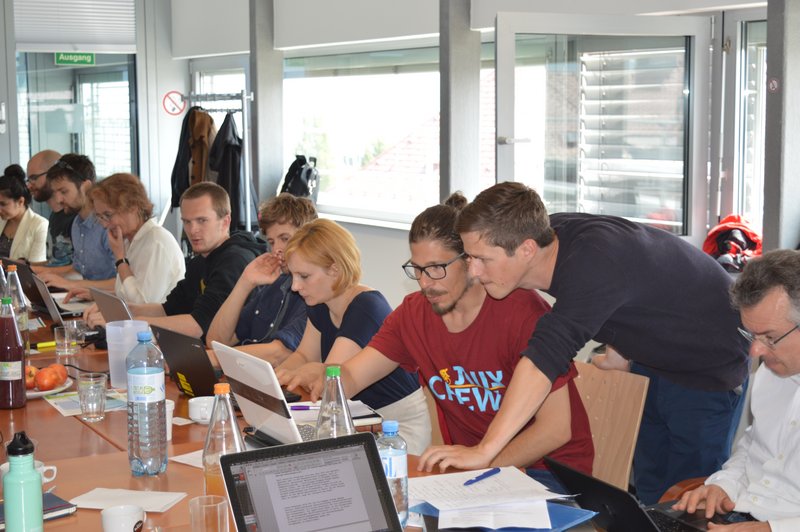
Of an original 23 registered participants from various CCCA member organisations (BOKU, IIASA, JKU Linz, MUL, TU Wien, Uni Graz, WU Wien, ZAMG), 20 people ultimately took part across both days. The extension to two days was welcomed and well received all round. As in previous years, following an introduction to the media landscape and journalistic practice, participants worked intensively on storytelling and the "translation" of scientific texts into content tailored to a general audience and specific target groups. In addition, work submitted to the editors in advance was discussed and refined in a practical setting.

In the coming years, the CCCA Writing Workshop will continue to be offered as a two-day event, allowing for a more in-depth engagement with the content!

5. Writing Workshop, 10.11.2021 in Vienna

After a one-year, Covid-related break, the 5th CCCA WRITING WORKSHOP took place on Wednesday, 10 November 2021, 10:00–17:00, at BOKU in the Ilse Walentinhaus, Vienna.

Of the original 20 registered participants from various CCCA member organisations (BOKU; IIASA, MUL, WU Wien, S4F), 14 early-career researchers ultimately attended the full-day event. Feedback from participants was overwhelmingly positive. Following an introduction to the media landscape and journalistic practice, participants worked intensively on storytelling and "translating" scientific texts into content tailored for both general audiences and specific target groups. Works submitted to the editors in advance were also discussed and refined in a hands-on setting.

With great enthusiasm, participants managed to pick up the "tools of the trade" for effective writing and apply them to their future texts. The early-career researchers also expressed a wish to extend the CCCA Writing Workshop to two days, in order to have even more time for questions, answers, and practice. A follow-up writing workshop next year is definitely in the pipeline!

4. Writing Workshop, 13.06.2019 in Salzburg

The University of Salzburg served as the most recent venue for the CCCA Writing Workshop on 3 June 2019, offering ten interested participants from a wide range of academic disciplines the opportunity to develop their skills in "translating" scientific content into media-ready texts.

Even the anonymity of the author when excerpting scientific texts couldn't conceal which field they came from. By the end, participants had a solid grasp of the stylistic features of journalistic writing and were ready to put them into practice in future press releases.

3. Writing Workshop, 24.05.2018 in Graz

In cooperation with the editorial team at DOSSIER, CCCA hosted a workshop on working with journalists and the media on 24 May 2018 in Graz. The venue this time was the Wegener Center at the University of Graz.

Alongside practical examples of effective writing style, the workshop offered the nine participants tips for successful publications: the trainers showed how to structure and write a press release in a way that grabs attention and gets picked up by the media. Less is more — and choosing the right words makes all the difference!

2. Writing Workshop, 10.10.2017 in Innsbruck

In cooperation with the DOSSIER editorial team, CCCA and alpS GmbH hosted a workshop on working with journalists and the media on 10 October 2017 in Innsbruck, with ten participants from the fields of climate research and climate impact research.

What makes a good story? How do you nail a compelling opening? And how do you write engagingly about a seemingly dry topic? In the writing workshop, the presenters worked together with participants to explore the fundamentals of journalistic writing, learning how to tell stories in a gripping and accessible way.

Alongside practical examples of effective writing style, the workshop also offered tips for successful publications: the trainers showed how to structure and write a press release in a way that grabs attention and gets picked up by the media.

1. Writing Workshop, 25.05.2016 in Vienna

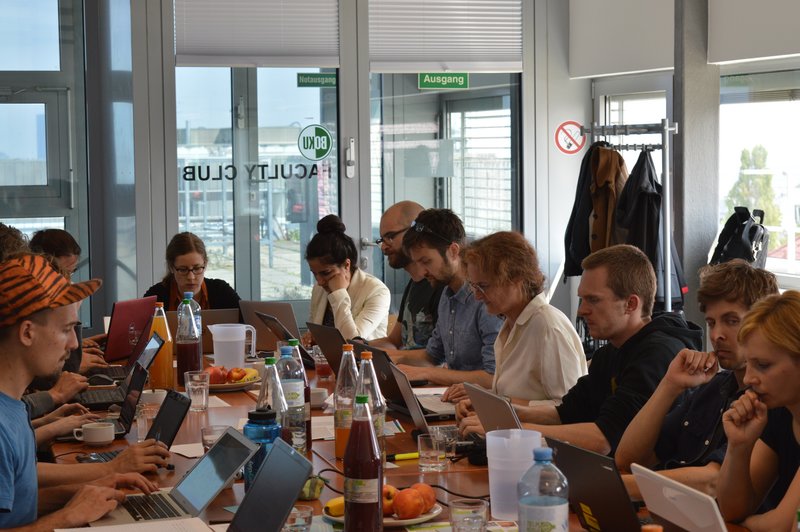
Twenty climate researchers from eight CCCA member organisations spent a day at BOKU working alongside the DOSSIER editorial team to perfect the art of the press release. Minds were buzzing and keyboards were running hot — after an intensive day of writing training, participants and trainers alike headed back to their research exhausted, but armed with a wealth of valuable insights.

"I really enjoyed the writing workshop. I picked up some great ideas from Georg and Florian and think they gave a brilliant overview of day-to-day journalism and loads of valuable tips. I'd very much welcome a follow-up."

"I absolutely loved the writing workshop. Florian and Georg managed to get across the most important tips and tricks for journalistic writing in no time at all. The day was engaging, enjoyable, and I came away with a great deal I can use in my work."

"I learnt a lot that I can apply on a daily basis. I found all the content genuinely useful and worthwhile — not just the tips for better writing, but also the practical guidance on how to get in touch with the press."