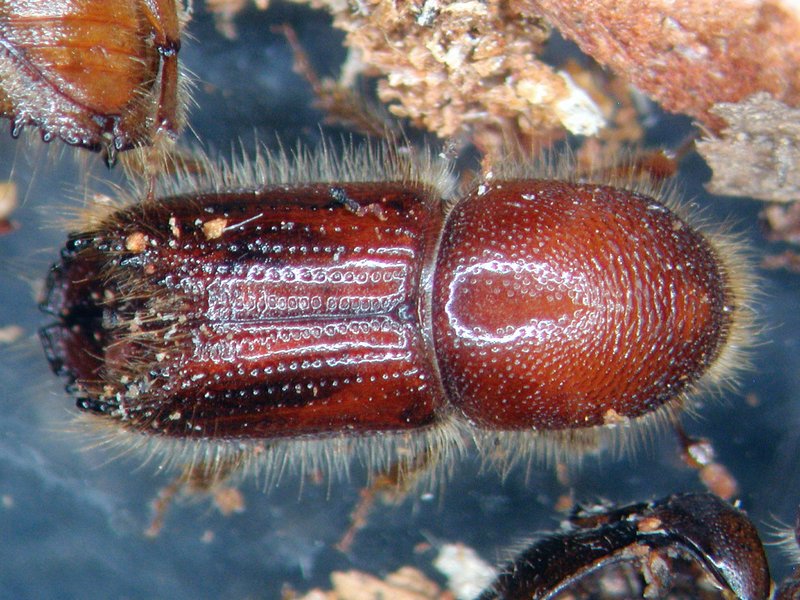


Bark beetle damage in Austria continued to decline in 2021 – down to 1.97 million solid cubic metres (Vfm), which is just under a quarter less than the previous year. The situation has improved in areas that were severely affected a few years ago, though this is offset by significant developments in the opposite direction in other regions.
According to the documentation of forest damage factors (DWF), bark beetle population development varied by region: the bark beetle calamity in the north – which at district level remained at a high level – was in decline in 2021. "The damage shifted, on the one hand, to areas along and to the north of the main Alpine ridge. On the other hand, a new bark beetle gradation emerged in the southern parts of the country, caused primarily by the high volume of breeding timber following abiotic damage in recent years and favoured by high temperatures," says Peter Mayer, head of the Federal Research Centre for Forests (BFW).
Lower Austria, Styria, Upper Austria and Carinthia with high volumes of damaged timber
Half of the federal states (Vienna is excluded due to its small forest area) reported an increase in beetle damage. The largest increase compared to the previous year was recorded in Tyrol (plus 141%, 196,000 Vfm). Carinthia (plus 44%, 250,000 Vfm) and Styria (plus 31%, 461,000 Vfm) followed with smaller increases but higher absolute volumes of damaged timber. In Salzburg, the volume rose by 7% (to 153,000 Vfm). Across Austria as a whole, beetle damage is declining, which is mainly attributable to the heavily affected federal states of Upper Austria and Lower Austria, each with a reduction of just over half, followed by Vorarlberg (minus 39%) and Burgenland (minus 22%). The highest absolute damage levels are found in Lower Austria (554,000 cubic metres), Styria, Upper Austria (252,000 Vfm) and Carinthia.
Find out more at: bfw.gv.at
Also read the BFW press report on "More roots in warmer forest soil"