

Global warming and all its impacts continue to advance almost unchecked. Current Austrian measures are not sufficient to make the necessary national contribution to emissions reduction and climate stabilisation. Despite international and national commitments, greenhouse gas emissions in Austria remain at a high level and — except during the first year of the pandemic (2020) — have even continued to rise in recent years. What's more, the approximately €14.5 billion in environmentally harmful subsidies introduced by the Austrian federal government in 2022 is further fuelling global warming.
The average temperature in Austria has risen by approximately +0.5°C per decade in recent times and, at currently around +2°C above pre-industrial levels, is already roughly twice as high as the global average. Globally, if all promised measures are implemented, we are currently heading towards warming of approximately +2.8°C this century. This scenario — which will occur if additional measures are not taken soon — will have significantly negative consequences for our quality of life: extreme weather events are intensifying worldwide, droughts are becoming more frequent, and previously fertile areas are increasingly drying out. Floods are threatening and destroying residential areas ever more frequently. All of this has massive implications for our security of supply and public health. Our livelihoods and economic development are at risk, and social inequalities are being reinforced.
In Austria, too, climate change has long since developed from an environmental problem into a societal problem, and its negative consequences are now perceptible in many ways. In recent years, there has been a marked increase in extreme weather events. The year 2018 was the hottest in Austrian meteorological history, and a grim record was set with 550 heat-related deaths (compared to 400 road fatalities). Drought events are also on the rise, with consequences for water levels in lakes and rivers and, by extension, our water and energy supply. The growing pest problem in Austria's forests is also largely attributable to climate change. Expenditure on climate change adaptation in Austria currently averages €1 billion per year, whilst damage costs amount to €2 billion per year. These adaptation costs are expected to more than double by mid-century, and damage costs — depending on the severity of further warming — could triple or even increase sixfold.
In purely mathematical terms, stabilising global warming at +1.5°C, as set out in the Paris Climate Agreement, would still be possible. However, there is a lack of understanding in key places regarding the urgency of the challenge and the economic potential of the solutions available. We still have the opportunity to shape the future together. Yet if some of the tipping points identified by climate science are crossed, this could trigger a domino effect leading to an uncontrollable and irreversible hothouse Earth. Every tenth of a degree more increases this risk.
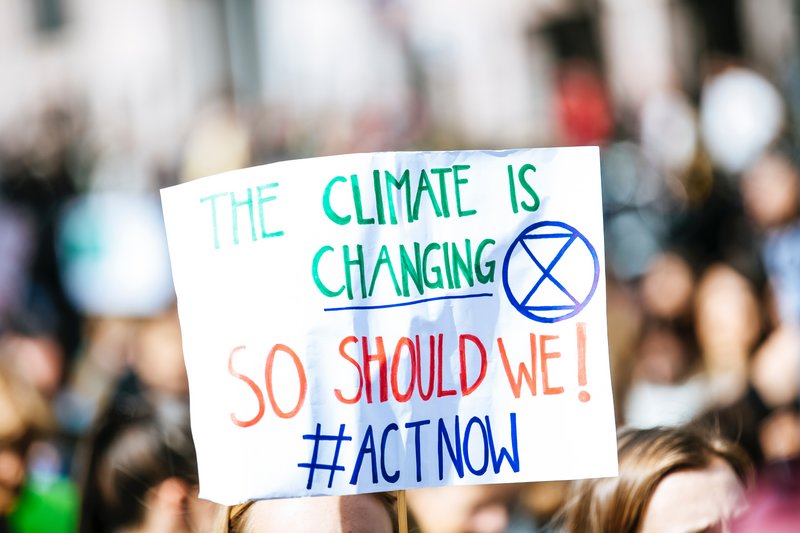
As a member of the EU, Austria has set itself ambitious targets and could also serve as an international role model through a bold climate protection pathway. As one of the countries with above-average per capita greenhouse gas emissions by international standards, it is now up to Austria to fulfil these commitments. This is — once again, and entirely justifiably — what protesters are demanding as part of the global climate strike on 3 March under the motto "Tomorrow is too late". The board of the Austrian climate research network CCCA also stands behind this cause.
CCCA, which is holding its general assembly all day on Thursday, 2 March 2023, sees it as its social responsibility to produce and communicate scientifically sound contributions to addressing the challenge of climate change. It also provides scientific advice for political and economic decision-makers. This pool of knowledge remains available to support Austria in tackling the central questions of this century.
On behalf of the CCCA Board: Daniel Huppmann, Helga Kromp-Kolb, Harald Rieder, Gerhard Wotawa, Alexander Passer, Tania Berger, Anna Meyer, Hans Stötter
Press releases and statements by the CCCA Board, individual board members, or experts do not necessarily reflect the positions of the CCCA member organisations.
PRESS RELEASE – Wednesday, 01.03.2023 Contact: Heide Spitzer, Tel. +43 (0) 664 856 51 48, Email heide.spitzer@ccca.ac.at