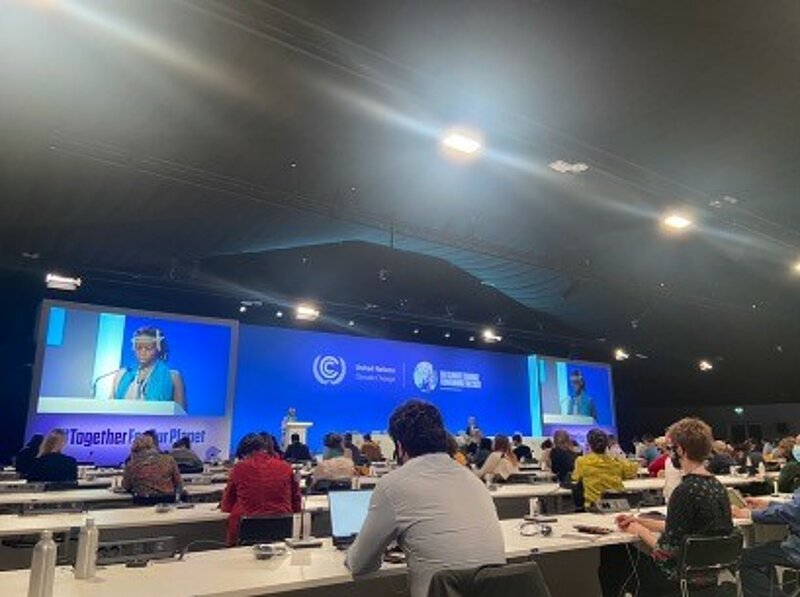


Awareness of the need to achieve the +1.5°C or "well below" +2°C target, as enshrined in the Paris Agreement, was clearly evident at COP26 and is once again emphasised with regard to the +1.5°C limit in the final document (the Glasgow Climate Pact). All 194 signatory states have, as required under the Paris Agreement, submitted reports on their planned climate protection and adaptation measures in the form of Nationally Determined Contributions (NDCs), although the level of ambition is not set by the Paris Agreement itself.
140 countries aim to achieve climate neutrality (net-zero emissions) at various points in time (Austria by 2040). The Paris Agreement's binding-yet-flexible mechanism therefore appears to be having an effect — though far from sufficient to achieve the +1.5°C target. According to estimates by the Climate Action Tracker, full implementation of the current NDC plans would result in global warming of approximately +2.4°C (range: +1.9°C to +3.0°C) by 2100, compared with an estimated warming of approximately +2.7°C (2.2°C to 3.4°C) under current policies. However, these projections are highly uncertain, as they assume full implementation of all proposed measures and concrete plans for the period beyond 2030 are largely absent. Several studies also project considerably higher warming rates.
Read the full CCCA press release!