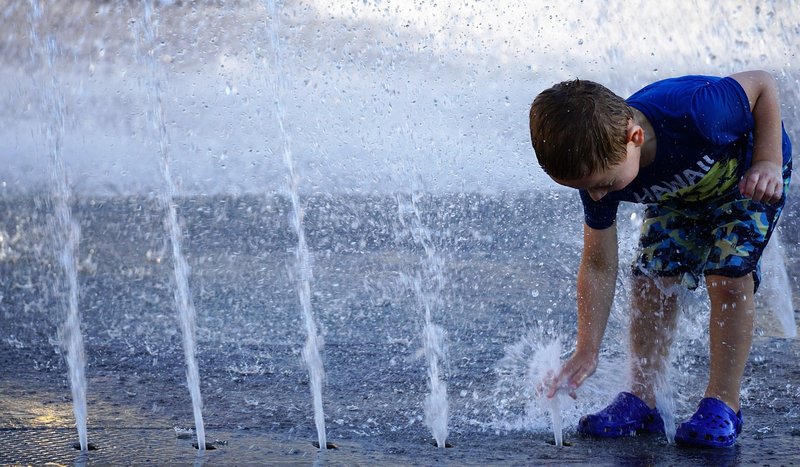


Around half of all children in Europe and Central Asia are already affected, and by 2050 this is expected to affect all of them. The consequences include nausea, poor sleep and aggression. Children feel the effects of heat particularly acutely. Unicef is therefore calling on governments in Europe and Central Asia to reduce CO2 emissions in order to limit global warming to 1.5 degrees Celsius, and to double adaptation financing by 2025.
The impacts of the climate crisis are most often not felt by those who caused it. This is the case with many crises. The problem is that those who feel the effects most strongly are often the least able to defend themselves. This is especially true for children, who are among the particularly vulnerable groups — including when it comes to climate change. This is also highlighted in a recent position paper by the UN children's agency Unicef: around half of all children in Europe and Central Asia — that's 92 million children — are exposed to extreme heatwaves. The analysis drew on the latest available data from 50 countries.
The report "Beat the heat: protecting children from heatwaves in Europe and Central Asia" also points out that children are particularly vulnerable to the impacts of heatwaves, and therefore face an elevated risk of serious conditions such as heatstroke.
Read everything about the topic of heat & children at derstandard.at!