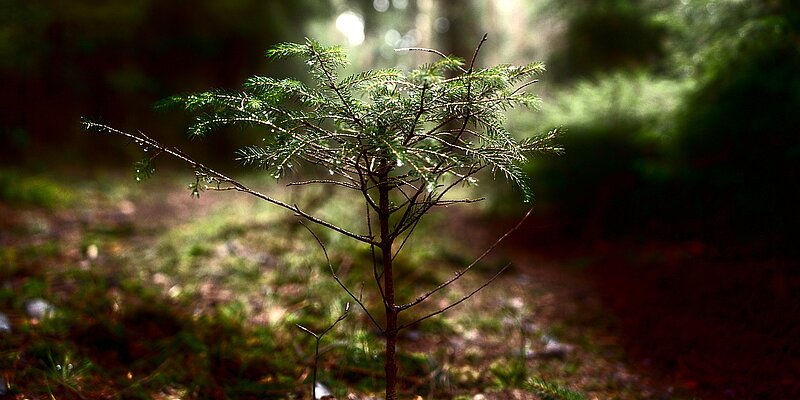


The Green Deal counts forests as an important player in achieving climate targets, but measurements in Mieming show that Austria's forests are increasingly unable to fulfil their role. During dry periods, they are now releasing more carbon than they are able to absorb.
When a year turns out drier than the long-term average, forests show an immediate response. When soils become too dry, plants close the stomata in their leaves to prevent water vapour from escaping. This results in them filtering less harmful CO2 from the air.
Due to climate-related changes, this process is having far-reaching consequences for Austria's forests. The University of Innsbruck has been observing the declining CO2 uptake during dry conditions since 2021 in a forest near Mieming. Data from the surrounding woodland areas feed into a small, inconspicuous container. Georg Wohlfahrt, deputy head of the Institute of Ecology, spends many hours a month here at a computer.
Forests barely binding greenhouse gases any more
The development of domestic forests is causing the scientist great concern. "More than 15 years ago, forests were still binding around 20 per cent of Austria's greenhouse gases – in recent years, that figure has been close to zero," says the expert.
Read the full article at: tirol.orf.at