

A first-hand account by Benedikt Narodoslawsky
The host has so far embarrassed itself as a negotiator. But even if the climate summit in Baku fails, the petro-state will profit from the conference.
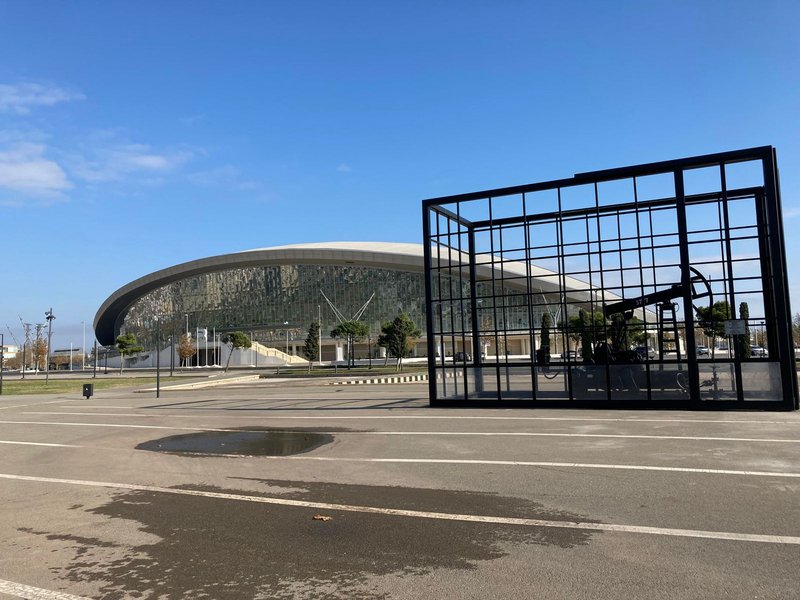
On Thursday afternoon, the square in front of the Crystal Hall in Baku is eerily empty. Twelve years ago, Azerbaijan put up the glass palace to host the Eurovision Song Contest. The shrill tones have long since faded. The Caspian Sea laps quietly at the shore, in the background you can hear a gigantic Azerbaijani flag fluttering, and construction machinery hums in the distance. The city feels as though it's been hit by a nuclear strike — many of the large squares look completely deserted, and the only survivors seem to be gardeners tending the parks, workers maintaining the grounds, and security personnel who are a constant presence throughout the city.
The UN Climate Conference (COP) has put Baku into a state of emergency. The Azerbaijani government sent children off on school holidays and spruced up the capital — touching up facades, repairing roads, and renovating parks. As the news site Bloomberg reports, public life changed completely just a few days before the COP: the traffic jams, the fruit sellers on the streets, the beggars, the unemployed offering themselves up for cheap jobs at so-called slave markets — all of them have vanished from the cityscape.
The square in front of the Crystal Hall offers an impressive view of Baku's skyline. To the northwest, three glass towers shaped like flames soar into the air, with bulky residential blocks rising high into the sky between them; to the northeast, the Crescent Hotel forms an iconic curved arch, flanked by high-rises…
Read the full article at derstandard.at