

This interview was conducted by Aloysius Widmann (DerStandard) and was published on 18 June 2018 on the <link https: www.ccca.ac.at typo3 derstandard.at polens-vize-energieminister-sind-nicht-so-privilegiert-wie-oesterreich internal link in current>Standard website.
STANDARD: The Executive Secretary of the UN Framework Convention on Climate Change, Patricia Espinosa, has referred to the climate conference in Katowice as Paris 2.0. Why is this conference so important?
Kurtyka: Because the parties agreed in Paris in 2015 to decide on concrete measures by the end of 2018 for how they intend to achieve the climate targets of the Paris Agreement. The conference in Katowice in December is the last opportunity to meet this commitment within the timeframe. I'm responsible for ensuring that we deliver concrete rules for implementing the Paris Agreement in Katowice.
STANDARD: What specific rules do you have in mind?
Kurtyka: They should be comprehensive and in keeping with the spirit of the Paris Agreement. Most importantly, legal certainty needs to be established. Countries should be committed to clear targets and measures. And they should also know what efforts they can expect from other states. Not every country needs to implement the same policies. Countries have different technological capabilities and different budgets. We need to take that into account.
STANDARD: You're referring to the so-called nationally determined contributions?
Kurtyka: Exactly. The nationally determined contributions are one of the most important elements of the Paris Agreement. The idea, incidentally, was born in Poland, at the 2013 climate conference in Warsaw. The intention behind it is straightforward: everyone is committed to a common goal, but everyone has different capabilities.
STANDARD: After Poznań in 2008 and Warsaw in 2013, this year's climate summit in Katowice is already the third in Poland within a decade.
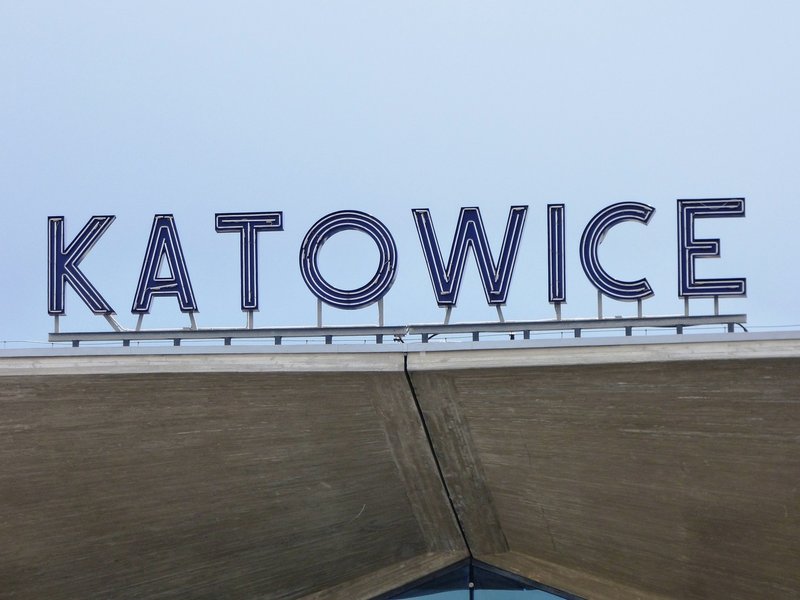
Kurtyka: And it's a symbolic one: the third in Poland and the one at which concrete climate strategies will be agreed. Katowice is also a symbolic venue. As the capital of Silesia, Katowice is situated in one of Poland's most densely populated regions, which was industrially built up under the Soviet Union — but without regard for the environment or the people living there. Over the past thirty years, Katowice has undergone an incredible transformation and today even calls itself a "green city". I think that alone makes the summit in the Silesian capital a symbolic one.
STANDARD: Yet Poland doesn't exactly have a reputation for being a pioneer in climate policy. Poland emits more carbon dioxide (CO2) than Spain, despite having a smaller population.
Kurtyka: Poland has made enormous efforts in the past. We've invested a great deal of money in wind energy and set ambitious targets as a government. Just a few days ago, we put forward a programme providing for investments of 130 billion złoty — that's more than 30 billion euros — in the modernisation of energy production.
STANDARD: Because you want to move away from coal as an energy source?
Kurtyka: That's one of the biggest challenges. More than three million homes in Poland still heat with coal stoves — with the corresponding air pollution. The Polish government takes this problem very seriously and is doing a great deal accordingly to clean up the air in cities. We're replacing old heating systems with more sustainable solutions, promoting electric mobility and thermal modernisation.
STANDARD: So your primary concern is clean cities, not the climate?
Kurtyka: The two go hand in hand. Road traffic generates enormous quantities of CO2 emissions. Electric mobility offers an environmentally friendly alternative that is gaining momentum and from whose growth many companies can benefit. Fundamentally, we need to think about political ambitions and economic feasibility together. That's why we want to get one million electric cars onto Polish roads by 2025. Poland also has one of the largest electric bus fleets in Europe. In 2017, the E-Urbino by Solaris was named Bus of the Year in Europe — not only as the first electric bus, but also as the first to be manufactured in Poland.
STANDARD: But back to energy production. What renewable resources can Poland tap into to move away from coal?
Kurtyka: European energy markets are highly integrated, and all countries have their own resources. Poland, for example, is not as privileged as Austria when it comes to hydropower. We can envisage a system in which renewable energies play a greater role, but also cleaner conventional energy sources. What's important is to develop storage technologies. That's why we're placing such a strong emphasis on electric mobility. Greater demand for electric vehicles will also lead to the development of ever better batteries. This in turn means that energy can be used more efficiently.
STANDARD: But batteries aren't manufactured in Poland.
Kurtyka: Nor elsewhere in Europe, for that matter. Some claim that batteries are the oil of the 21st century. We're working with the European Commission, Sweden, France and Germany to attract battery developers and manufacturers to Europe.
STANDARD: Europe could simply tax CO2 emissions to reduce them. Several states have already considered this.
Kurtyka: We've only just reformed the Europe-wide emissions trading system. One should wait and see how the reform plays out before moving on to the next measure. We should achieve our climate targets by betting on technological progress, not necessarily on taxation. (Aloysius Widmann, 18.6.2018)