

In cooperation with the Wegener Center at the University of Graz
Scientific Curator: Douglas Maraun (Wegener Center for Climate and Global Change at the University of Graz)
Artistic Director: Heike Marie Krause
Curators: Heike Marie Krause, Wolfgang Paill, Michael C. Niki Knopp
Design: Natalie Frühmann, Heike Marie Krause
Duration: 28.05.2021–09.01.2022
About the Exhibition
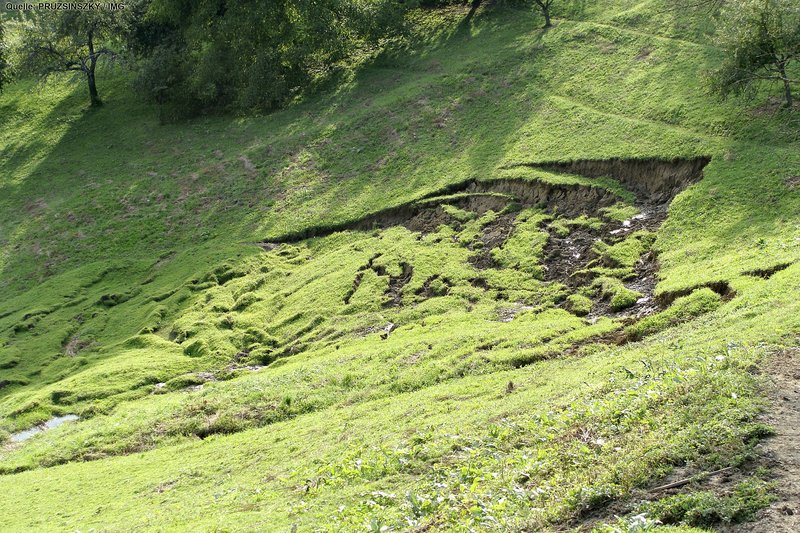
In 2009, within just a few days, over 3,000 landslides occurred in south-east Styria, triggered by heavy rainfall. The resulting damage to houses, roads, meadows and farmland amounted to more than 10 million euros.
To what extent does human-caused climate change influence events like these? What role do changes in land use play? How can people protect themselves against such events? These research questions were addressed in a study led by the Wegener Center for Climate and Global Change at the University of Graz. The findings of this study are presented in the special exhibition Ground in Motion. Landslides in the Context of Climate Change in the Styria Relief Room of the Natural History Museum.
It turned out that the influence of climate change on the 2009 landslides was weak, but detectable. Should global warming continue unchecked, several developments could occur: these range from a significant reduction in the risk of landslides with much drier soils (though with the resulting consequences for agriculture) to a drastically increased risk with a sharp rise in rainfall. However, if the ambitious limit on global warming agreed in the Paris climate target can be achieved, the risk of landslides would increase only marginally.
The exhibition offers insights into the complex interplay of the various factors at work here. It shows what measures can be taken to reduce the risk of landslides, but also makes clear that climate protection and nature conservation can pursue quite different goals. The importance of a holistic approach is therefore highlighted.
A photographic documentation, a multimedia projection onto the Styria Relief, audio interviews with those affected, and a glimpse into a well during a landslide complement and illustrate the study's findings.
Find out more at: museum-joanneum.at