

Educational and research institutions can provide the necessary impulses for societal change. However, to equip graduates with the competencies needed to tackle the Global Grand Challenges, a paradigm shift is required — with new ways of thinking and working, engagement, and attitudes that make sustainable development possible.
After 3 years of intensive engagement with the CO2 footprint of their own school, exciting climate weeks at Lake Neusiedl and on the Pasterze glacier, training as Climate Peers, cross-curricular project-based learning, and phenological observations, the project team around Helga Kromp-Kolb celebrated the conclusion of "makingAchange"!
But don't worry — the formats are continuing! A range of tools have been developed to help young people make their contribution to the transformation of society and to integrate and embrace the topics of climate protection and sustainability as a matter of course.
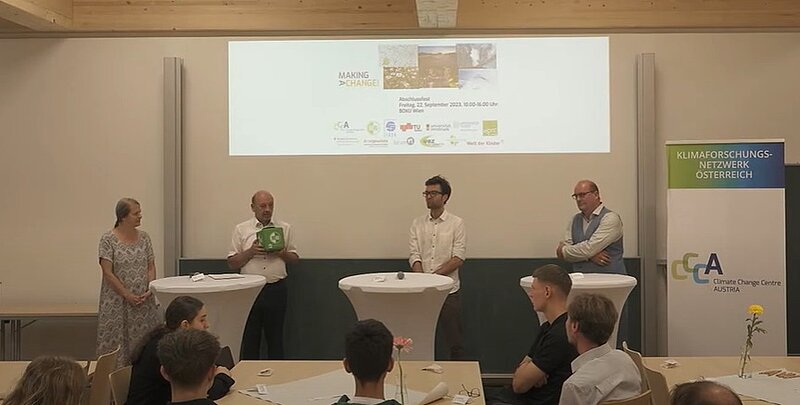
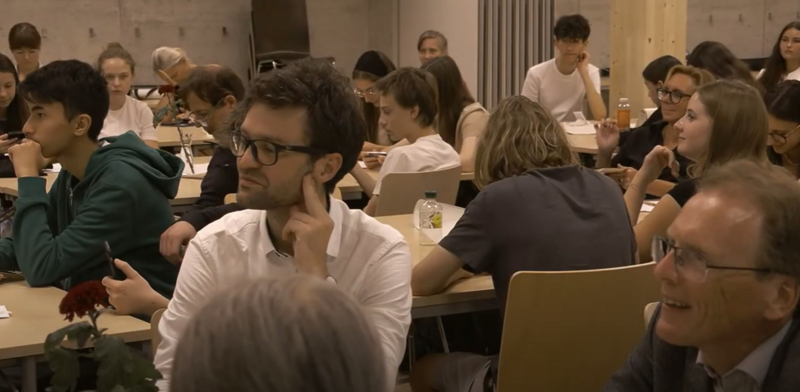
On Friday, 22 September 2023, all mAc formats were presented once more at the Ilse Wallentin Haus at BOKU Wien as part of the mAc project closing celebration, and the projects developed by participants were showcased.
Following a welcome from the head of CCCA – Climate Change Centre Austria, Katrin Brugger, the project team shared introductory remarks about the idea behind the climate education project and its first manifestation.
Climate researcher Helga Kromp-Kolb, meteorologist and climate researcher Herbert Formayer from BOKU Wien, geographer Hans Stötter from the University of Innsbruck, and systems scientist and economist Thomas Schinko from IIASA spoke about the initial hurdles in securing funding and, in particular, the challenges posed by the COVID-19 pandemic in 2020.
Maximilian Schickl from the University of Innsbruck then presented the effectiveness analysis voting tool. This gave both guests in attendance and viewers at home the opportunity to share their assessments of the individual formats via an app.
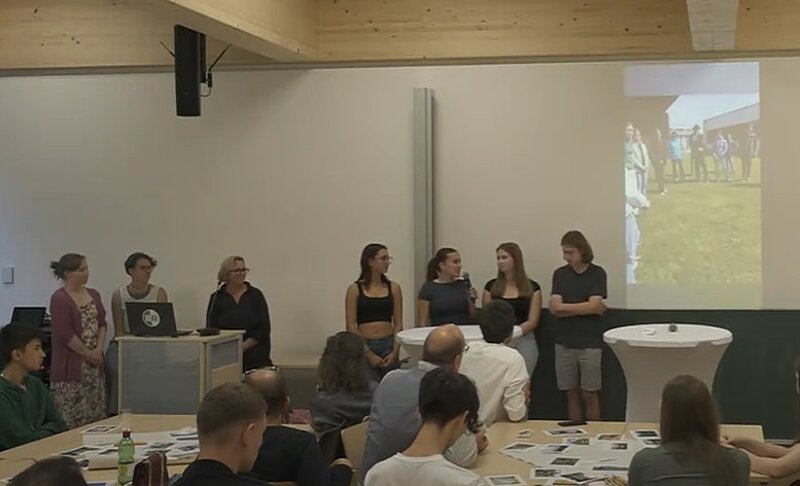
The first mAc format to be presented was the CO2 accounting tool developed specifically for schools by TU Graz and BOKU. Barbara Truger (TU Graz) and Vivienne Pirker (BOKU) provided insights into the CO2 balance as a basis for climate protection in schools, developed together with Joachim Thaler from BOKU. From autumn 2023, the makingAchange CO2 accounting tool will become part of the TUit Workshop programme at TU Graz. In addition, all the projects and follow-ups that emerged from the CO2 accounting work were presented. The two project teachers Johannes Hörmann from Gymnasium Schärding and Thomas Prieler from BHAK/BHAS Wien10, together with their pupils, presented the results of their CO2 accounts, which were carried out across all three school years in some cases.
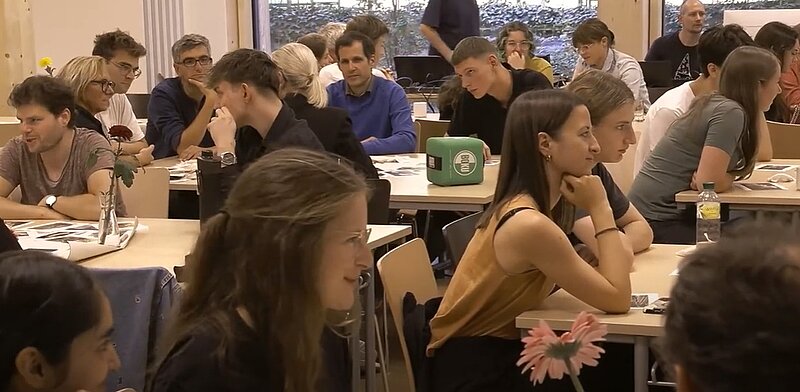
After a headcount of guests led to a reshuffling of seating, there was an opportunity for scientists and pupils to mingle and get to know one another — sparked by a conversation about their choices of various landscape photographs.
Barbara König from BOKU and Irina Heitmann from the University of Innsbruck then presented the climate weeks, which took place in the east alongside the national park rangers at Lake Neusiedl and in the west in the high mountains on the Pasterze glacier and in Obergurgl.
Pupils from BRG der Diözese Eisenstadt Wolfgarten and their teacher, Gerda Kirchknopf, shared their experiences of the climate weeks and the phenological observations through a music-accompanied slideshow.
After questions from the audience, the next format — the Climate Peer training programme — was introduced with the ORF "Thema" documentary by Markus Stachl.
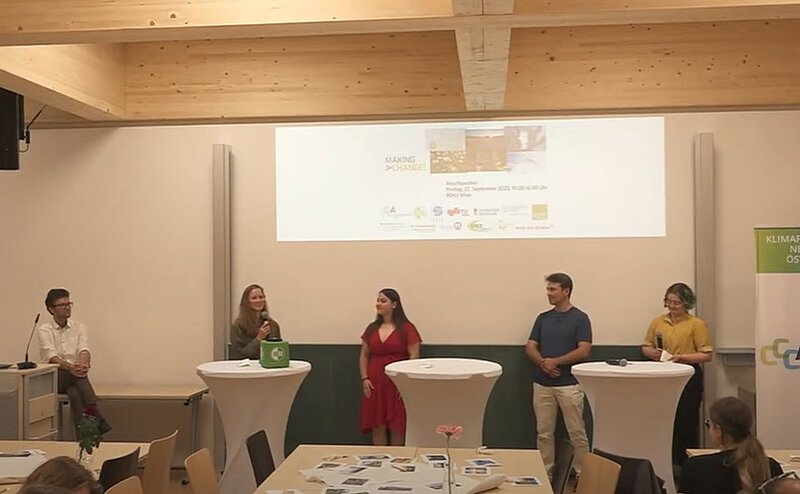
Thomas Schinko, Magdalena Tordy, and Emma Prantl, all from IIASA, presented the concept and the collaboration between science, practical partners from children's, youth, and environmental education (UBZ or Welt der Kinder), and the teachers and pupils who had been involved from the very early stages and without whose participation the format would not have been the success it was.
Susanne Weissl, a former pupil at BRG Boerhaavegasse who took part in the Climate Peer training in the first year of the project, spoke about her motivation and what has developed out of the training. Project teacher Clemens Kussbach reported on the Climate Peers at HTL Rennweg, the climate club that emerged there, and the annual climate day.
To wrap things up, Thomas Schinko presented the Climate Peer training handbook, which can be downloaded here.
Irina Heitmann from UIBK then spoke about cross-curricular project-based learning. Under the title "Learning by doing — transdisciplinary learning in cross-curricular projects", the theoretical background was introduced before focusing in particular on the workshops and the support provided by students through the P2P training programme.
David Bröderbauer from the University of Vienna rounded off the presentations of the mAc formats, presenting the phenological observations as well as the educational work of the Botanical Garden and the Green School. A big thank-you was also extended to Karin Oberauer from the University of Innsbruck, who coordinated the climate weeks, phenological observations, and cross-curricular project-based learning during the first two years.
The event closed with final remarks from climate researcher and project lead Helga Kromp-Kolb, in which she once again emphasised that makingAchange had delivered what was hoped for, though it remains unclear what comes next. What will certainly continue are the methods and content developed within this project, which will remain available to every pupil going forward. Efforts are also being made to establish a kind of coordination office to maintain contact between science and schools. Alongside engaging with the topic of climate change, the pupils also showed a great deal of personal development and have become effective agents in society. This should also be supported by universities. Major challenges can only be overcome when as many people as possible get involved with the goal of achieving this transformation.
The day wrapped up with a shared get-together over coffee and cake — a day full of fascinating impressions, for and from both pupils and scientists. The mAc closing celebration can be watched on YouTube.