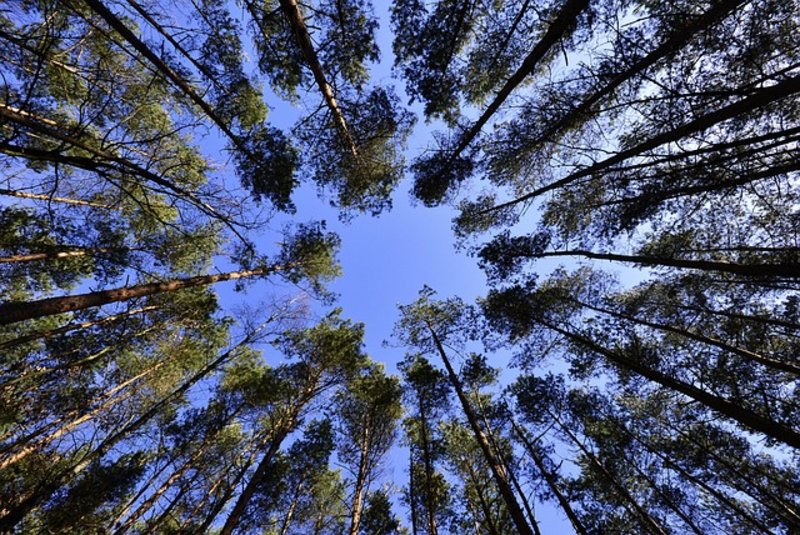


Forestry expert Rupert Seidl talks in this interview about how forests can slow down climate change and the extent to which bark beetles and drought are threatening their ability to store CO₂.
Forests are far more than just a green backdrop: they store vast amounts of carbon, provide habitat for countless species, and supply us with wood as a renewable raw material. But climate change is putting them under increasing pressure — heat, drought, and pests are threatening their capacity to absorb CO₂. Rupert Seidl, Professor of Ecosystem Dynamics and Forest Management in Mountain Landscapes at the Technical University of Munich, speaks with the Austrian Academy of Sciences (ÖAW) about the role forests play today in climate protection, how their storage capacity has changed, and why we need to both adapt and drastically cut emissions in order to keep them as an ally.
Forests fighting climate change
What role do forests play in the fight against climate change?
Rupert Seidl: Forests play a very central role in the global climate system, particularly through the exchange of carbon with the atmosphere. Around a third of human-made CO₂ emissions are currently being reabsorbed directly by forests. Without this sink function of forests, climate change would already be considerably more severe. However, forests are not a "climate saviour" that can solve the problem on their own — they can only contribute part of the solution. Nevertheless, they represent a kind of "transitional technology", as they currently store carbon most efficiently — more efficiently than many technical solutions such as Carbon Capture and Storage. Trees do this on their own and, in the process, deliver many additional benefits: timber, habitats for species, recreation, and so on.
Read the full interview at: oeaw.ac.at