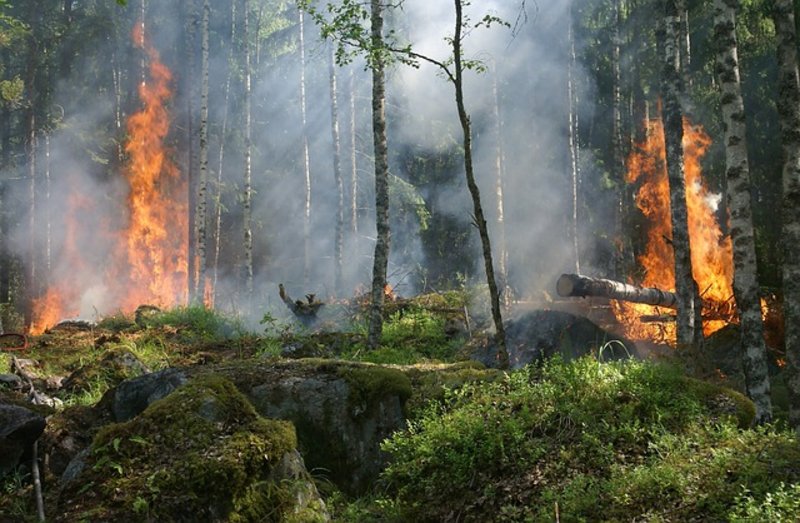


Climate change is increasingly influencing the dynamics of wildfires worldwide and intensifying smoke development. The resulting air pollution poses a serious threat to public health. This is the finding of two new attribution studies on the impacts of climate change, produced with the involvement of the Potsdam Institute for Climate Impact Research (PIK) and published in Nature Climate Change. The first study shows that burnt areas worldwide increased by 15.8 per cent between 2003 and 2019 due to climate change, with fire activity growing particularly in Australia, South America, western North America, and Siberia. This increasing fire dynamic is offsetting the global decline in burnt areas driven by land-use changes and rising population density. Building on this, the second study examines how climate change is linked to a worldwide rise in deaths from fire-related air pollution. Climate change has increased these deaths from 669 per year in the 1960s to over 12,500 in the 2010s.
"Our study shows that, once fires occur, the influence of climate change, with drier and warmer weather conditions, is becoming ever more significant," explains Chantelle Burton, researcher at the UK's Met Office Hadley Centre and one of the lead authors of the first study.
Read everything about the study at pik-potsdam.de