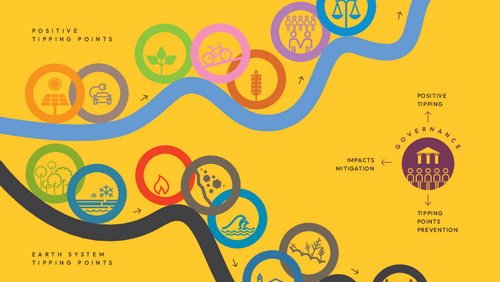


A tipping point in a system is a point of no return. Once this point is reached, even small changes can trigger drastic and irreversible shifts in the behaviour of the system. Climate tipping points are critical thresholds at which even minor additional disturbances can fundamentally alter the climate system. Tipping elements are large-scale components of the climate system that can reach a tipping point. This changes the way the system itself functions and can have significant implications for human wellbeing. Several tipping points could be crossed within the range of global warming of 1.5 to < 2 °C set out in the Paris Agreement. However, the risk of this increases sharply at warming levels of 2 °C to 3 °C — which is the path we are currently on. It is possible that causal interactions between tipping points exist. The triggering of one tipping point can increase the likelihood that further tipping points are triggered in a cascade.
Albert Ossó from the University of Graz and Laurenz Roither from the Climate Change Centre Austria explore when this phenomenon was first identified, how it is measured, and what its impacts could be in the newly published CCCA Fact Sheet!