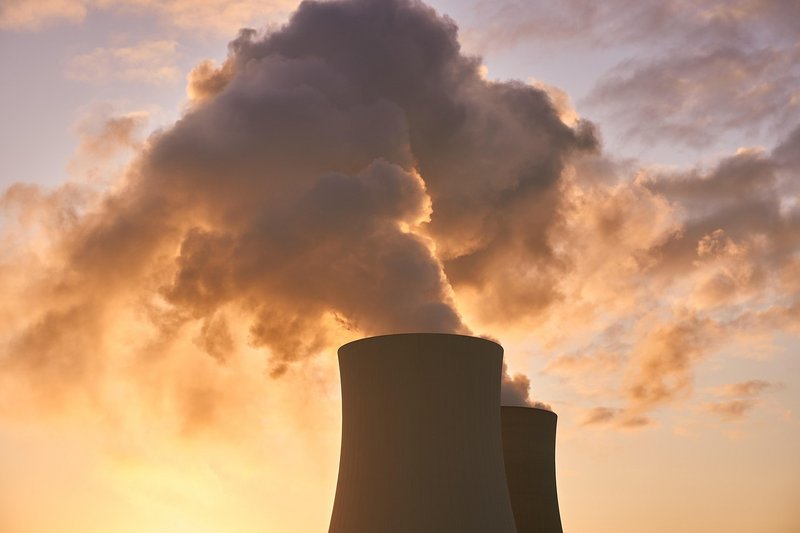


If the government doesn't change course, penalty payments are all but certain. Ahead of the government retreat, environmental organisations and the Greens are calling for a rethink in climate policy.
Austria's climate record is a mixed bag. The transport sector has been considered the biggest problem child of domestic climate policy for decades. Imago Images
Even the unwieldy title "Greenhouse Gas Scenarios for the Long-Term Budget Forecast 2025" can barely conceal the political explosive potential: Austria will significantly miss its 2030 climate target under the current political course. This is what the Environment Agency Austria has calculated in a new study commissioned by the Finance Ministry. If policymakers don't introduce additional climate protection measures, the republic will emit up to 20 megatonnes more CO2 than permitted by 2030. And that could get very costly.
By 2030, the European Union wants to cut emissions of climate-damaging gases by 55 per cent compared to 1990. To help the EU achieve this target, every EU member state has committed to reducing its own emissions. For Austria, the goal is as follows: by 2030, greenhouse gases entering the atmosphere should be 48 per cent lower than in 2005 — the year with the highest CO2 emissions on record. If Austria fails to achieve this, the republic will have to purchase emission certificates from other countries to offset its own shortfall.
The Environment Agency Austria's calculations are therefore of great importance to the Finance Ministry: the scale of the so-called "penalty payments" depends not only on how many emission certificates are available on the market, but also on how far Austria misses the target. There's a lot of money at stake. A study commissioned by the Finance Ministry and reported on by the STANDARD last May put the potential penalty payments at up to €5.9 billion.
Read the report by Benedikt Narodoslawsky at: derstandard.at