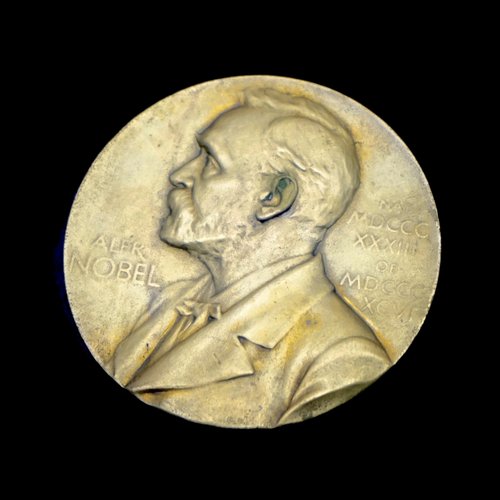


This year's Nobel Prize in Physics goes half to Japanese scientist Syukuro Manabe and German scientist Klaus Hasselmann. The other half goes to Italian scientist Giorgio Parisi. All three work on the physics of complex systems, such as the global climate. The Nobel Prizes are endowed with ten million Swedish kronor (around 980,000 euros) per category.
Complex systems are characterised by randomness and disorder, making them very difficult to understand. This year's prize recognises new methods that describe these systems and can predict their long-term behaviour. Meteorologists Syukuro Manabe (90) and Klaus Hasselmann (89) laid the foundations for our understanding of the global climate and human influence on it. Physicist Giorgio Parisi (73) is recognised for his revolutionary contributions to the understanding of random processes at all scales – from the atomic to the planetary.
Statement from the Nobel Committee
Starting in the 1960s, Manabe demonstrated how increasing levels of carbon dioxide in the atmosphere lead to a rise in global temperatures, the Nobel Prize Committee announced. He was the first to explore the interaction between radiation balance and the vertical transport of air masses. His work laid the foundation for the development of today's climate models.
More on this at: science.orf.at