

The 25th Conference of the Parties (COP25) to the UN Framework Convention on Climate Change (UNFCCC) in Madrid has had quite a journey. Originally planned for Brazil, Chile was set to host the annual negotiations. Following civil unrest over rising public service prices, Chile found itself unable to host the meeting, and Spain organised the gathering of 197 contracting parties in record time. One notable innovation is that the conference, now taking place in Madrid, is for the first time entirely in female hands — led by UNFCCC Executive Secretary Patricia Espinosa and the two ministers presiding over the conference, Environment Ministers María Carolina Schmidt from Chile and Teresa Ribera from Spain.
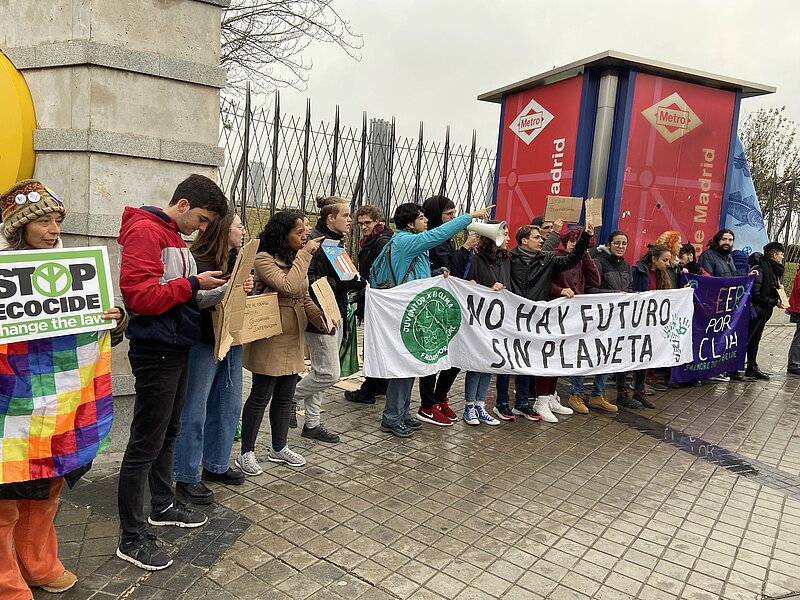
Where do things stand after the first week, which is traditionally devoted to technical negotiations? There's been a lot of movement in the negotiating halls, the pavilions of countries and international organisations (including the scientific community), as well as on the streets of Madrid — a large demonstration led by Greta Thunberg brought together around 50,000 people. The negotiating positions themselves still need considerably more movement, particularly regarding the rulebook for the implementation of the Paris Agreement from 2020 onwards.
For the most part, the necessary rules were adopted at COP24 in Katowice in 2018, coordinating the reporting and mutual evaluation of progress on climate protection and adaptation goals — the Paris Agreement as a whole is based on voluntary commitments, but also on mutual evaluation and strengthening of ambition. In Madrid, the following negotiating positions in particular remain open:
- Rules for global CO2 trading (Article 6 of the Paris Climate Agreement): The Paris Agreement is based overall on the idea of strong domestic emissions reductions through comprehensive decarbonisation of the economy and society. Many contracting parties also include international trading of emissions reduction certificates in their climate protection plans. In order not to undermine the targeted global emissions reduction and to reward those (through revenues from selling certificates following CO2 reduction) who are making massive efforts, it's essential to ensure that reductions actually take place (compared to a base year such as 1990) and that reductions are not counted twice (by both the reducing and the acquiring country); it's also important that emissions reduction measures are implemented in an ethical and socially responsible manner, which was not always the case with actions under the Kyoto Protocol.
- A clear timeframe for revisions of national climate protection and adaptation plans (Nationally Determined Contributions — NDCs): As originally envisaged, many negotiators, particularly those from countries in the Global South that are especially affected by climate change, are calling for five-year timeframes; some industrialised countries in particular are proposing that this be done only every ten years. Given that current collective efforts fall far short of the Paris 1.5oC target, the shorter timeframe appears necessary, as it allows for timely mutual evaluation and adjustment of plans. The EU appears to be undecided on this important issue, and clarifying its position could help move things forward.
Furthermore, and not directly relevant to the Paris rulebook but very much relevant to collective climate ambition, Madrid is also seeing discussions on how to deal with climate impacts that occur despite adaptation efforts and that particularly affect vulnerable countries in the Global South. The negotiations under the heading of "Loss and Damage" are evaluating progress under the so-called Warsaw Mechanism (WIM), adopted six years ago. What has been assessed positively in Madrid is the knowledge exchange and capacity building that has taken place over recent years under the WIM; however, little has been done on the question of additional support for those who suffer most from the impacts of climate change, particularly in terms of financing.
The political decision-makers arriving at ministerial level in the second week are now called upon to resolve the outstanding technical issues. Ultimately, however, the Madrid meeting also serves to reinforce overall climate ambition. Many contracting parties have taken action to reduce emissions — most recently Denmark, which has enshrined in law an emissions reduction of 70% by 2030 (compared to 1990) as well as financing for developing countries. Global greenhouse gas emissions are still rising, currently at lower rates of growth; however, global emissions would need to fall sharply in the coming years to give the 1.5oC target any chance of being met. Current ambition through national pledges would, according to projections, lead at best to global warming of approximately 3 degrees, with catastrophic consequences for people and ecosystems, including in Austria, as various scientific reports from the past two years show — most prominently the IPCC's special reports on the 1.5oC target, on land, and on oceans and the cryosphere, as well as the APCC report on health and climate change.
The role of science is being given appropriate recognition in Madrid so far and, alongside the calls for stronger climate ambition, is set to be prominently mentioned in the final text of the negotiations. Actions by civil society — well represented among those observing and commenting on the negotiations, with good Austrian participation — should provide additional momentum and strengthen the collective ambition on climate protection and adaptation. As a central closing point, Friday for Future demonstrations are once again planned worldwide on the final day of negotiations, Friday 13 December, including outside the doors of the Madrid negotiations.
On behalf of the CCCA Board, Dr Reinhard Mechler