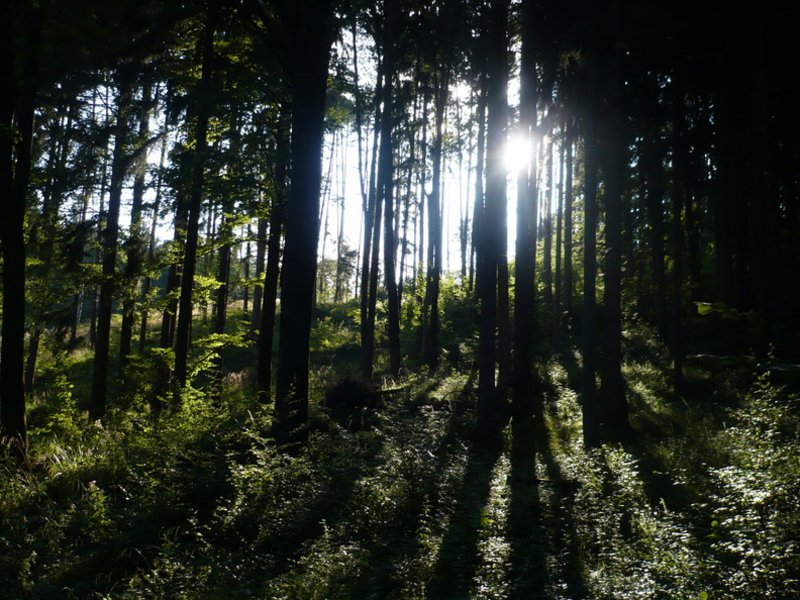


Climate change doesn't stop at political borders, and neither does the search for solutions to sustainable forest management: to find suitable seeds and seedlings for trees that can better adapt to the conditions of a changing climate, we need to look beyond national borders, as most tree species base their natural range on ecological habitats rather than national boundaries. For example, oak provenances from Hungary could also be cultivated in eastern Austria. The SUSTREE project is on the lookout for these cross-border provenance regions.
SUSTREE focuses on seven ecologically and economically important tree species in Europe. The experts involved in SUSTREE want to raise awareness among forestry practitioners and stakeholders in central Europe about the importance of genetic diversity. In 2017, forest managers, conservationists and staff from forest nurseries in six countries were surveyed online. 800 people shared their views on the possibilities for climate change adaptation, the significance of genetic variation, and the opportunities they see for using forest reproductive material.
Making use of genetic diversity
All survey participants rated climate change as the most important factor that will influence their economic activities in the future. The majority of respondents considered the selection of planting material adapted to climate change to be significant and would like to give greater consideration to genetic diversity in forest management, but feel poorly informed about how to do so. "Filling this knowledge gap is the main task of the SUSTREE project," explains project leader Dr Silvio Schüler from the Federal Research Centre for Forests (BFW).
In the first project phase, the technical groundwork was laid for an information app: climate data from the EURO-CORDEX climate database was converted into 83 annual, seasonal and monthly, biologically relevant climate variables for two climate scenarios. Distribution maps were also compiled and a database of existing provenance trials was created. These data have already been used to evaluate the delineation of existing provenance regions. Norway spruce and pedunculate oak served as model tree species, and it became clear that individual countries applied different criteria for their delineation. A climate comparison has already made it possible to define provenance regions with similar climatic conditions. These clusters are to be used subsequently for defining cross-border provenance regions.
The first project results were presented at the end of April 2018 in Chorin, Germany. SUSTREE is funded by the Interreg Central Europe programme and aims at the conservation and sustainable use of tree species diversity in the context of climate change. Eight organisations from Austria, the Czech Republic, Germany, Hungary, Poland and Slovakia are working together on the project. The project is led by the Federal Research Centre for Forests, Vienna.
For further information and contact details, please visit the <link www.ccca.ac.at typo3 www.interreg-central.eu content.node sustree.html external-link-new-window internal link in current>SUSTREE homepage