

The following article was first published in <link https: derstandard.at experten-beklagen-versaeumnisse-in-oesterreichs-klimapolitik external-link-new-window external link in new>Der Standard on 13 November 2017 (text: Nora Laufer):
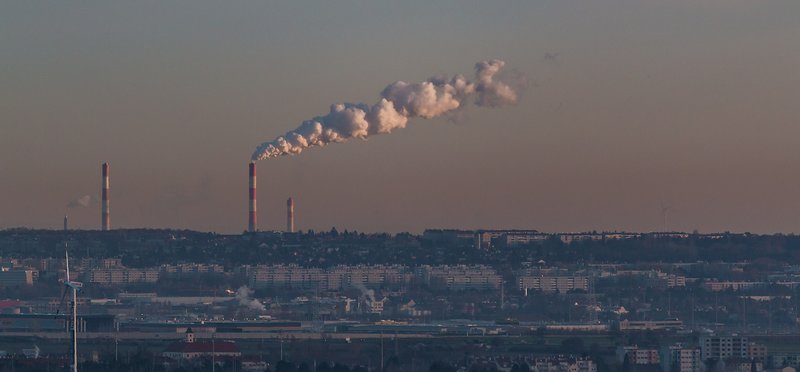
Carbon dioxide emissions in Austria have risen over the past three years — despite the commitments made under the Paris Climate Agreement. "The trend is continuing," said Angela Köppl, environmental economist at the Austrian Institute of Economic Research (Wifo), at a press briefing on Monday.
Energy consumption in Austria is also expected to rise again this year. Köppl warns that the emissions problem cannot be solved in the long term through renewable energy alone. Wifo expert Stefan Schleicher shares this view: "The Austrian energy system is on a collision course." He considers a "robust reset" to be necessary.
Next level
The debate needs to be taken to the next level 2.0, said Schleicher. So far, the discussion has centred on where energy comes from and how much it costs. Far more important, however, is to ask the question of "what for" and to steer the discussion towards the entire value chain "from end use to supply."
Schleicher emphasises that there is still a great deal of development needed, particularly in the building sector. Houses should in future be built to be "multifunctional," the expert says. Such buildings draw their energy from a geographically small surrounding area and otherwise operate in an energy-autonomous manner. The expert cites photovoltaic systems for local electricity needs as an example. Another option would be the switch from local to district heating, for instance through waste heat and a local gas network using biogas.
There are already some nearly energy-self-sufficient buildings in Austria. However, investor interest in such projects has so far been limited. One reason for this could be the higher upfront investment costs associated with a multifunctional building. Schleicher puts these at three to six per cent. The additional costs would, however, be offset in the long term by comparatively lower operating costs.
The state should inform
The Wifo experts see it as the role of the public sector to disseminate relevant information on climate protection and energy efficiency. According to Schleicher, the fact that markets have not yet become receptive to innovations such as multifunctional buildings is down to an information problem. Reaching level 2.0 will not be achievable through the provision of public funding alone, Köppl warns. Setting standards will also be necessary. However, implementing such far-reaching measures will also require raising public awareness, said Wifo director Christoph Badelt. "A government only responds when it feels that something is popular."