CCCA-News 02/2019

Dear CCCA Newsletter subscriber,

the streets are currently shaped by the image of young people. Thousands are raising their voices to openly express their discontent with environmental policy and to stand up for influence over political decisions regarding climate protection and the preservation of our natural foundations for life. And if necessary, even in uncomfortable ways — by staying away from school.

Not only is "Fridays for Future" attracting increasing media attention — an international statement by climate researchers was recently published in the renowned scientific journal Science — but more than 26,800 Austrian, German and Swiss scientists are now also supporting this global movement.

To quote a Fridays for Future organiser, these actions must continue now more than ever: "It must not remain a flash in the pan...".

The following topics are covered in this 2nd newsletter:

  • CCCA Highlights of 2018
  • JPI Climate White Paper: Operationalising knowledge on and for societal transformations in the face of climate change
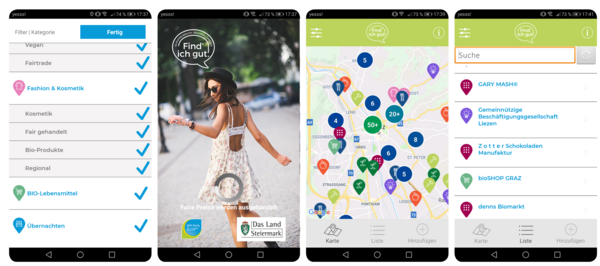
  • Klimatag App: Download it now
  • New Fact Sheet published: "The keeping of farm livestock in stables"
  • UniNEtZ SDG 13
  • 8th Styrian Climate and Energy Forum visits the Stiefingtal
  • 4th Symposium: Rethinking Consumption
  • 4th Sustainability Day in Graz
  • Job vacancies and event notices

CCCA wishes you an enjoyable read.
CCCA News

CCCA Highlights of 2018

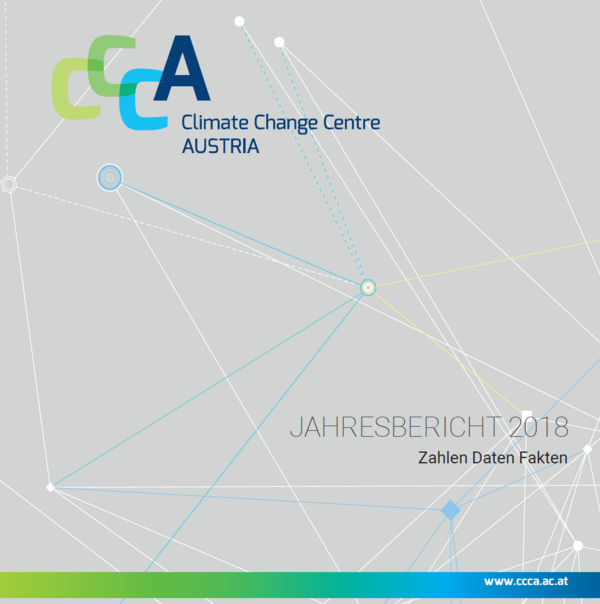
Under the motto "CCCA goes International", the highlights of CCCA's activities in 2018 have once again been compiled in an annual report. It presents in a concise format the achievements and services of the CCCA facilities, events, collaborations, and the numerous activities of the CCCA community. The online version can be found here. The print version is available at the Klimatag and at further CCCA events.

If you'd like a copy sent to you, please send an email to servicezentrum@ccca.ac.at.

JPI Climate White Paper: Operationalising knowledge on and for societal transformations in the face of climate change

JPI Climate has produced a White Paper that forms the basis for the medium-term programming of JPI Climate in the area of humanities and social sciences in relation to climate change research. This White Paper identifies five thematic areas and two cross-cutting aspects for which there is a high research need and which are set to guide calls for proposals in the coming years. The aim is to reach as broad a range of humanities and social scientists as possible. In addition, the White Paper serves as a guide to transdisciplinary approaches in research; it encourages critical and reflexive processes in the generation of knowledge.


JPI Climate is now once again placing greater emphasis on research in the humanities and social sciences; if you'd like to give feedback on this White Paper or are interested in getting involved in activities in this area at the European level, please get in touch with Elisabeth Worliczek (elisabeth.worliczek@ccca.ac.at)

Klimatag App: Download It Now

As we're doing without most print materials this year, we invite you to use our improved Klimatag App once again to view the up-to-date daily programme and plan which sessions you'd like to attend.

The app is available for iOS and Android — use the links, the QR codes shown in the image, or search for "Klimatag" in the store to download it.

All the details about the programme and getting to the 20th Austrian Klimatag can also be found on the website here.

The CCCA team looks forward to seeing you and to the exciting programme at the Klimatag in Vienna!

New Fact Sheet published: "The Keeping of Agricultural Livestock in Stables"

A new Fact Sheet on the topic of "Impacts on agriculture" has recently been published, entitled "The keeping of farm livestock in stables".

One of the authors is Günther Schauberger (University of Veterinary Medicine Vienna). The PiPoCooL project investigated the impacts of global warming on the indoor keeping of pigs and chickens. The focus was on heat stress in the animals and its effects on their health, welfare, and productivity. In addition to current husbandry practices, adaptation measures to reduce increasing heat stress in animals were also examined. These include energy-saving air treatment systems, reducing animal stocking density in stables, and adaptation measures for ventilation systems.

The Fact Sheet can be downloaded either here or by clicking on the image!

News

UniNEtZ SDG 13

The project "UniNEtZ – Universities and Sustainable Development Goals" connects 16 universities to work together on achieving the Sustainable Development Goals (SDGs). One of its aims is to produce an options paper on how the SDGs can be fulfilled in Austria.

CCCA in UniNEtZ

UniNEtZ is organised so that each project partner takes on a lead role or a contributing role for one SDG at a time. CCCA's task is to take the lead on SDG 13 "Climate Action", and thus, among other things, to coordinate all contributions to the options paper for SDG 13 and the interactions of the other SDGs with SDG 13 (including beyond the UniNEtZ partners).

The lead role within CCCA is managed by Isabella Uhl-Hädicke, Herbert Formayer, and Ingeborg Schwarzl (overall coordination and contact).

UniNEtZ kicked off with its launch event in January 2019 and runs until the end of 2021.

On the UniNEtZ website you'll find all further information about the project.

If you're interested in and have the opportunity to contribute to the work on SDG 13, we'd love to hear from you!

Contact: Ingeborg Schwarzl

8th Styrian Climate and Energy Forum visits the Stiefingtal

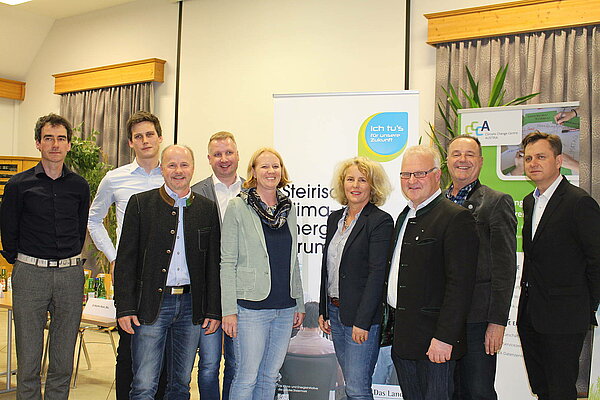
The state of Styria, together with CCCA and the KLAR! Region Stiefingtal, invited guests to the 8th Styrian Climate and Energy Forum in the municipality of Pirching on 04.04.2019. Around 70 interested attendees took the opportunity to discuss the topic "Climate Change in Styria – Between Heat and Frost" with the speakers. Together, they explored how the latest research findings in the areas of agriculture (fruit growing and livestock farming) and housing (sustainable construction, smart systems) can be put into practice in the Stiefingtal, in order to prepare the region as well as possible for future changes.

Representatives from three member organisations took the opportunity to present their research findings in this context:

  • Mag. Dr. Franz Prettenthaler, (LIFE - Centre for Climate, Energy and Society, Joanneum Research) presented the climate status for the years 2017 and 2018 for Austria, with a focus on climate risk for Styrian agriculture.
  • Following this, DI Mag. Dr. Martin Schönhart (University of Natural Resources and Life Sciences Vienna) presented the latest research findings on the topic of heat stress in pig farming. The PiPoCool project highlights the negative impacts of heat stress in livestock farming and provides farmers with concrete tips for optimising animal welfare and animal health.
  • Many buildings are not equipped to handle the challenges posed by climate change and offer inadequate options in terms of shading, ventilation, or proper thermal insulation. What the key elements of climate change-adapted buildings and resilient settlements are was demonstrated by DI Martin Röck, BSc (Graz University of Technology).

The three presentations were introduced by Styrian Climate Protection Coordinator Mag. Andrea Gössinger-Wieser. She emphasised the need to act in the face of climate change, which means stepping up climate protection whilst simultaneously and gradually preparing for climate change adaptation.

DI (FH) Isabella Kolb-Stögerer (KLAR! Region Stiefingtal) presented flagship projects that are already being implemented in the Stiefingtal, as the region is both a climate change adaptation region (KLAR!) and a climate and energy model region (KEM).

At the end, participants were able to share their views and questions on the topic in a discussion. A review and the speakers' presentations will shortly be available at http://www.ich-tus.steiermark.at.

4th Symposium: Rethinking Consumption

Repair & Do-It-Yourself activities on the one hand, and discussions about the circular economy on the other, are currently considered promising examples of how current modes of consumption and production can be reorganised and reshaped in the spirit of a sustainable society.
This year's 4th Symposium "Rethinking Consumption" will take place from 17 to 18 October 2019 at the Institute for Advanced Studies Vienna. It provides a space to discuss
both from a scientific and a practice-oriented perspective the relevance, the interactions as well as the possibilities and limitations of the aforementioned phenomena of repairing, making things yourself and using things for longer on the one hand, and circular economy practices on the other.

For more information, click on the image!

4th Symposium: Rethinking Consumption

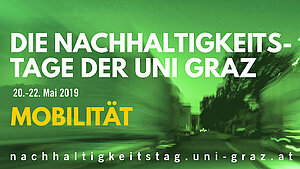
The University of Graz invites you to the fourth Sustainability Days from 20–22 May 2019, with a focus on "Sustainable Mobility".

In addition to various workshops, talks, an SDG exhibition, a panel discussion, and a mobility and initiatives fair, this year will see the first-ever Green Mobility Design Thinking Challenge (GMDTC) taking place on 20 and 21 May 2019 at the Meerscheinschlössl.

As part of the GMDTC, Bachelor's, Master's and PhD students can get hands-on experience with the innovation method of Design Thinking and, together with Design Thinking coaches from AVL, Magna, NEO and SAP, develop, test and pitch sustainable ideas and concepts for the mobility of the future in interdisciplinary teams over the course of 2 days.

Motivated students can still apply until 21 April 2019 at https://nachhaltigkeitstag.uni-graz.at/de/gmdtc/

Further information about the Sustainability Days: https://nachhaltigkeitstag.uni-graz.at

Upcoming Events

In the CCCA calendar you'll find numerous further details on climate (research)-relevant events.

If you'd like to publicise events this way, please send the relevant information to info@ccca.ac.at.