

14 July 2016
English
CCCA-News 4/2016: CCCA Data Centre online, latest calls...
Dear CCCA-News subscriber,
with the development of the CCCA Data Portal, we're offering a central service in the form of easy access to data relevant to climate research. We'll be keeping you up to date on current calls and reporting on projects from our member organisations. Here's a quick overview of what else is covered:
- APCC - Standards and Special Report "Health, Demography and Climate Change"
- New board composition
- The CCCA website is now available in English too!
- "IPCC - how it works"
- Networking project Ö-KryoNet
- Networking project C4Austria
- k.i.d.Z.21-Austria
- Climate Change Adaptation in Mauritania
- Z_GIS & the UNEP Report on Loss and Damage
- Job board
- Upcoming events
The CCCA team wishes you an enjoyable read and a relaxing summer!
CCCA Data Centre online
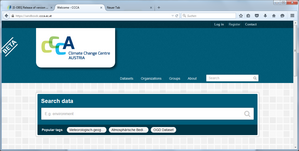
One of CCCA's core services is providing easy access to data relevant to climate research from a wide variety of sources. This data is made accessible through the CCCA Data Portal and is continuously expanded. On 1 July 2016, the testing phase of the CCCA Data Portal got underway.
Through the CCCA Data Portal, the CCCA Data Centre acts as a data provider, ensuring access to the distributed information of CCCA members and other institutions involved in climate research in Austria. The aim is to integrate, locate, and make available a wide variety of data in one central place. This data covers not only meteorological data (precipitation, temperature), but — a Europe-wide innovation — also social science data, for example from interviews and surveys. To this end, a web-based infrastructure has been set up that enables transparent data cataloguing, data search, and archiving.
Alongside some test data, you'll find the current climate scenarios from the project "ÖKS 15 - Climate Scenarios for Austria" as the first complete dataset in the CCCA Data Portal — these are referenced in the current ACRP call (see below).
In order to refine the portal's functionalities together with its users, the CCCA Data Centre team would welcome feedback on the beta version of the Data Portal at datenzentrum@ccca.ac.at
Any technical questions about the Data Portal can be directed to Chris Schubert (Head of the CCCA Data Centre)
APCC - Standards and Special Report "Health, Demography and Climate Change"
The APCC working group, established by the CCCA board to continue the APCC project, has developed quality standards for APCC products, modelled on the criteria of the IPCC and the APCC-AAR14. In addition, a detailed description of the tasks of the APCC working group and of the establishment and function of the Austrian Panel on Climate Change has been drawn up. These documents were approved by the CCCA board and are now available on the CCCA website on APCC.
APCC Special Report: Health, demography and climate change
The current 9th ACRP call has included a call for an APCC Special Report on the topic of "Health, demography and climate change" (see ACRP guidelines 4.5).
One of the key goals of Special Reports, as outlined in the APCC standards, is strong coverage of the entire Austrian community in the relevant subject area. To this end, the CCCA office is available as a communication hub and first point of contact for expressions of interest in contributing to the advertised Special Report.
If you're interested in contributing to the Special Report on health, demography and climate change, you can express your interest to the CCCA office by email at info@ccca.ac.at .
Please also indicate specifically how you'd like to get involved — for example, whether you:
- would like to be involved through events (e.g. expert or stakeholder meetings) or similar
- are able to contribute specialised written input to the Special Report (including grey literature)
- are interested, given your expertise, in taking on editorial responsibility within the Special Report.
Responses will be collected by the CCCA office and made available to one or more future project consortia.
The submission deadline for ACRP projects is 19 September 2016, so we'd kindly ask you to send us your responses by 16 August if possible, to give project consortia sufficient time for exchange and proposal development. Later responses will, however, also be accepted.
If you have any questions about APCC and the advertised Special Report, please feel free to get in touch with the CCCA office team at info@ccca.ac.at.
New board composition
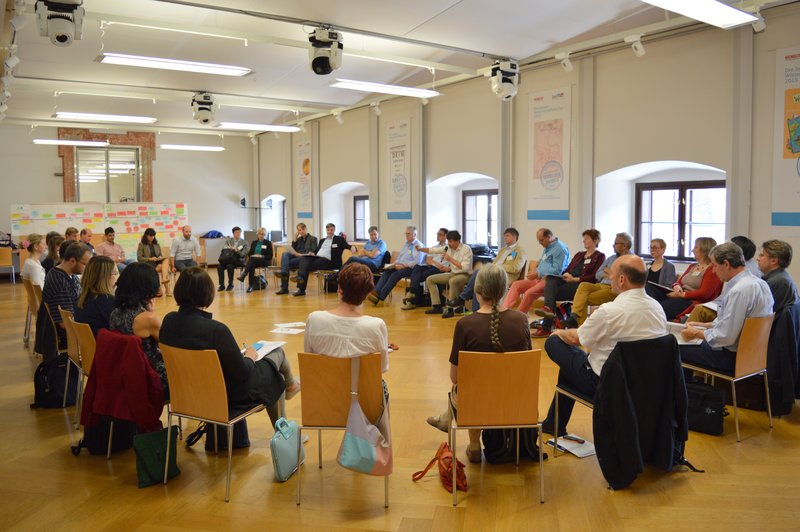
Following the resignation of three board members, Karl Steininger (University of Graz), Reinhard Mechler (IIASA), and Robert Jandl (BFW) were co-opted as new board members at the board meeting on 3 June 2016 and confirmed by the general assembly.
You can find the new board and its roles here.
The CCCA website is now available in English too!
Visits to the CCCA Website from English-speaking countries have increased noticeably over the past few months. This prompted us to translate the website, so that the content is available to an international audience!
"IPCC – how it works"
On 1 July 2016, the workshop "Austrian Science in IPCC AR6", jointly organised by CCCA and ÖAW, took place, giving interested parties the opportunity to find out about and discuss the IPCC, its structure and working methods, as well as the steps and tasks involved in the 6th IPCC assessment cycle.
Further information, along with the presenters' slides and the outcomes of the discussion groups, can be found here.
Networking Project Ö-KryoNet

The Austrian cryosphere research community met to exchange ideas about international networks. On 15 June 2016, the first workshop of the CCCA networking project "Ö-KryoNet" took place.
For this, 13 Austrian cryosphere researchers from eight research institutions, along with a representative of the Salzburg regional administration, gathered in Salzburg. The aim of this first meeting was to present the international initiatives GCOS, GTN-G, GTN-P, GLIMS, RGI, GCW and LTER, each overseen by individual institutions, and to identify and discuss potential synergies as well as possible gaps. As a first concrete result of the networking meeting, it was agreed to bring together all the presented initiatives within the CCCA Data Centre, in order to make the available data and information accessible to a wider research community in Austria.
The aim here is by no means to create additional redundancies, but rather to further support the visibility and accessibility of the data for various user groups.
If you're interested in getting involved in this open networking project, please get in touch with Annett Bartsch (ZAMG) - annett.bartsch@zamg.ac.at.
Networking Project C4Austria

Networking project C4Austria launches current-state analysis of Austrian climate change communication: The project C4Austria (Connecting Climate Change Communicators in Austria), funded by the Climate Change Centre Austria, aims to better connect actors involved in climate change communication. This includes, among other things, developing a competence map, defining shared objectives, developing joint strategies and project ideas, and establishing long-term working groups in climate change communication. The first step is carrying out a current-state analysis, with the goal of reaching as many actors as possible via an online questionnaire.
By filling in the questionnaire, you'll be helping yourself and all other climate change communicators to work better together in the future. If different groups communicate on different topics related to climate change, we'd ask you to fill in the questionnaire separately.
Many thanks for your help! As we're keen to continuously expand our list of actors, we'd ask you to suggest any further institutions active in climate change communication. If you have any questions about the survey or the C4Austria networking project, please contact annemarie.koerfgen@uibk.ac.at
k.i.d.Z.21-Austria – first teacher training completed
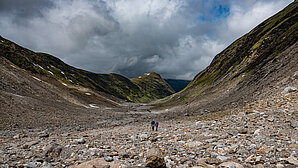
The first teacher training event at the University Centre in Obergurgl was successfully completed. Between 26 and 28 June 2016, 32 teachers from AHS, BHS and LMS schools across various federal states engaged with the core ideas of the project under the guidance of the k.i.d.Z.21-Austria team from the University of Innsbruck. In doing so, they developed concrete steps that are important for implementation at their own schools. This marks another important milestone towards an Austria-wide roll-out of k.i.d.Z.21-Austria.
A large proportion of the teachers will now be launching k.i.d.Z.21-Austria projects at their own schools in autumn 2016. The team at the University of Innsbruck is looking forward to an exciting school year with lots of new k.i.d.Z.21-Austria "kids"!
For more information about the project, visit the k.i.d.Z.21 website or the blog.
Climate Change Adaptation in Mauritania
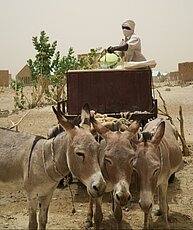
Z_GIS finalized a spatially explicit vulnerability assessment for climate change adaptation in Mauritania; Client: The German Federal Enterprise for International Cooperation (GIZ). Although the living conditions in the Sahel are difficult and extremely dependent on weather conditions, especially in rural areas, adaptation to climate change is a key issue to address in the wider development context.
To alleviate this issue, the GIZ initiated a project to assess how the capacity to adapt to climate change in rural areas can be improved. The main objectives were to support key national actors in the design and implementation of adaptation measures identified within national planning processes and to strengthen intra- and inter-sectoral cooperation.
In a joint consortium with adelphi from Germany, the Department of Geoinformatics - Z_GIS at the University of Salzburg carried out a spatially explicit vulnerability assessment to climate change for the two main livelihood sectors of Brakna and Assaba: agricultural and pastoralism activities.
For more information please, click here.
Z_GIS & the UNEP Report on Loss and Damage: The Role of Ecosystem Services
In a joint project with UNEP and a number of other institutions the University of Salzburg and its Department for Geoinformatics - Z_GIS contributed to a new UNEP report on 'Loss and Damage: The Role of Ecosystem Services'. The report was launched earlier this month at the second session of the UN Environment Assembly (UNEA) in Nairobi and aims to enhance understanding of climatic stressor effects on ecosystems and possible correlations and implications for societal losses and damages.
Link to the report.
For additional information please see climate-l.iisd.org.
Sparkling Science
Universities, universities of applied sciences, universities of education, non-university research institutions and private universities are invited from Wednesday, 15 June 2016 to Friday, 30 September 2016 to submit research projects that are carried out exclusively with the involvement of pupils. As close collaboration with partner schools is a prerequisite for a successful application, the submission window will remain open until the end of September. This gives research institutions and schools sufficient time to prepare successful collaborations.
ACRP
In 2016, a total of 5.15 million euros is available for the ACRP funding programme and 300,000 euros for the APCC Special Report. Funding is available for research projects dealing with aspects of climate change, its impacts in Austria and possible adaptation measures.
- Regarding guideline Chapter 4.0: Information on the CCCA Data Centre and the ÖKS data can be found in this newsletter or here.
- Regarding guideline Chapter 4.5: Information on APCC standards can be found in this newsletter or here.
The submission deadline is 19 September 2016 at 17:00.
EIP-AGRI
Second call for the submission of projects under EIP-AGRI. Changing conditions brought about by advancing globalisation, digitalisation and climate change frequently pose major challenges for agricultural and forestry enterprises, which urgently require new solutions and approaches. Through targeted collaboration between practice and research, problems in the agricultural and forestry sector are to be solved innovatively and translated more quickly into new findings, products, services and technologies.
Funding is available for so-called Operational Groups, in which partners from various fields (e.g. farmers, researchers, upstream and downstream sectors, associations) work together on innovative projects.
Project proposals and funding applications can be submitted until 30 September 2016.
All information on the calls mentioned above and further calls can be found here.
Current job vacancies can be found on our job board.
Upcoming Events
Summer School 2016: Poverty, Migration and Climate Change
12–16 September 2016
Schloß Retzhof
12–16 September 2016
Trieste
<link nc de ccca-aktivitaeten kalender detailansicht-tag termin event tx_cal_phpicalendar inquimus_spatial_and_temporal_dynamics_of_risk_and_vulnerability>Inquimus: Spatial and temporal dynamics of risk and vulnerability
21–23 September 2016
University of Salzburg
In the CCCA Calendar you'll find numerous further references to climate (research)-relevant events. If you'd like to publicise events this way, please send the relevant information to info@ccca.ac.at.
CCCA Dates
Editorial deadline for the next CCCA News:
16 September 2016
Use the CCCA newsletter to share your institution's activities with the climate research community!
The CCCA team is happy to help if you have any questions: servicezentrum@ccca.ac.at, info@ccca.ac.at