The presentations from the Pre-Conference Day can be found here.
The talks and posters from the scientific conference programme can be found here.

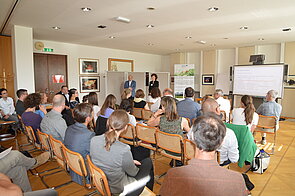
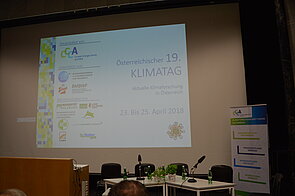
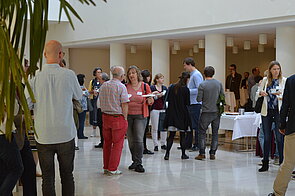
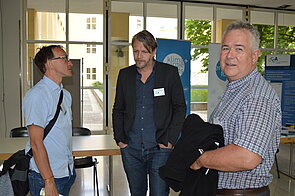
From 23 to 25 April, more than 250 scientists, multipliers, and people from public administration came together for the first time in Salzburg to discuss the challenges of climate change and share scientific progress at the 19th Austrian Climate Day.
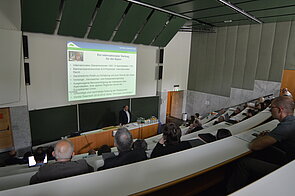
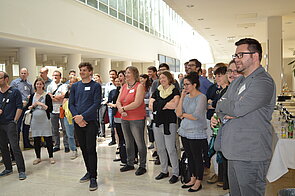
The 2018 Climate Day was once again kicked off with the so-called Networking Day on Monday, 23 April, which centred on exchange among climate researchers but also, and especially, with stakeholders from public administration and practice. This year's theme was "Alpine Regions in Climate Change – The Alpine Convention as a Platform for New Ideas and Approaches to Sustainable Development", developed in cooperation with the Permanent Secretariat of the Alpine Convention and the Ministry of Sustainability and Tourism.
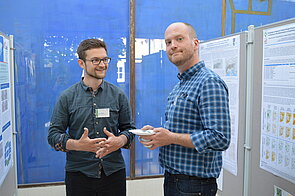
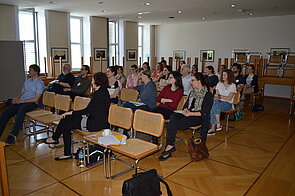
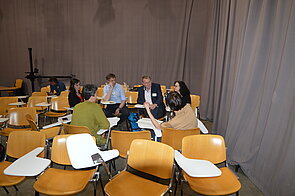
At the same time, there was again a dedicated meeting for early-career researchers, who discussed the topic of "Alpine Risks – Challenges, Solutions, Governance". The early-career researchers were able to use the meeting to present their research projects and work on the topic and to identify and make use of potential interfaces with the other participants.
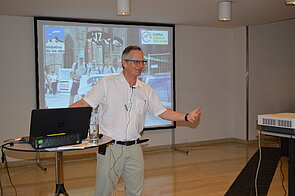
After treats from the buffet, the day wrapped up with a contribution from Harry Spiess (ZHAM) entitled "The Alps in Transition – a personal account from TransALPedes 1992 to whatsalp 2017".
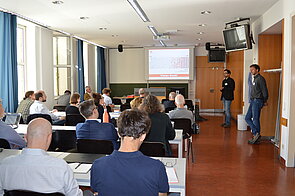
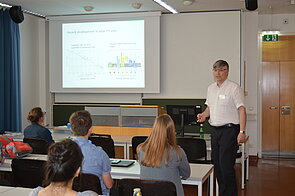
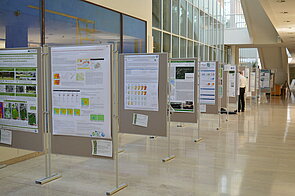
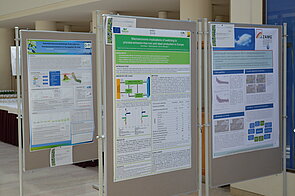
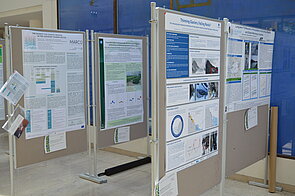
The following days were, as is tradition, dedicated to presenting the latest research findings from the past year, with around 90 talks and posters. Relevant insights into the future of tourism in the Alps, the opportunities and risks of a mobility strategy adapted to climate change, and the fiscal implications of potential damage caused by changing conditions spanned the thematic scope of the conference.
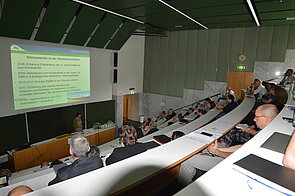
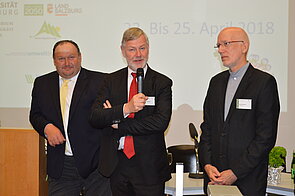
After the formal opening on Tuesday, 24 April by host Arne Bathke (Dean of the Faculty of Natural Sciences), Ingmar Höbarth (Climate and Energy Fund), Helmut Hojesky (BMNT), Markus Reiterer (Permanent Secretariat of the Alpine Convention), Gunter Sperka (State of Salzburg, Salzburg 2050) and Hermann Josef Hack (Global Brainstorming Project), the keynotes by Tobias Luthe (ETH Zurich) and Micha Croci-Maspoli (MeteoSwiss) on the overarching theme of climate change in the Alps provided the intellectual impulse for the conference.
The subsequent talk by Kate Raworth – on her concept of Doughnut Economics – deliberately sent a strong signal for the necessary reorientation of our economic system and presented an internationally acclaimed counterpoint to the creed of continuous growth.
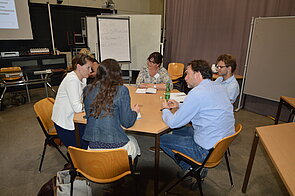
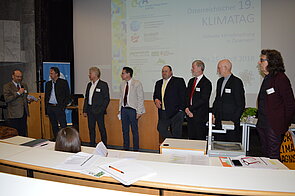
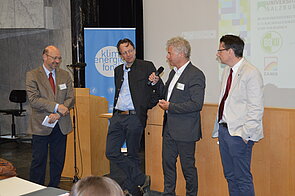
The exchange between science and public administration was again a central item on the programme this year. Under the title "The Tension Between Climate Research and Policy – Everyone Wants the Best, but Does Everyone Get What They Need?", a discussion took place with Ingmar Höbarth (Climate and Energy Fund), Helmut Hojesky (BMNT), Birgit Bednar-Friedl (University of Graz), Markus Kottek (Climate Protection Coordinator Carinthia), Gerhard Pausch (Regional Association Salzburger Seenland) and Stefan Kienberger (University of Salzburg). This was followed by a group session in which the points raised in the plenary were explored in greater depth. A photo protocol of the results is available as a PDF here.
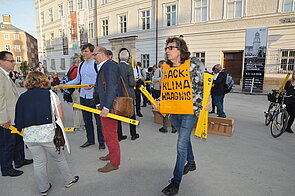
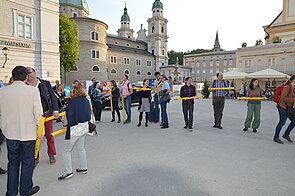
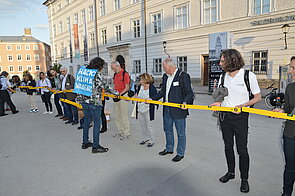
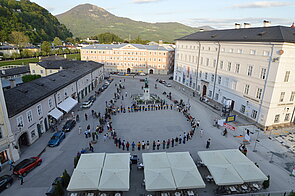
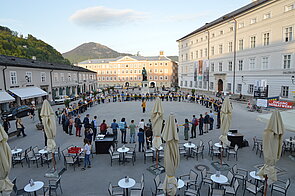
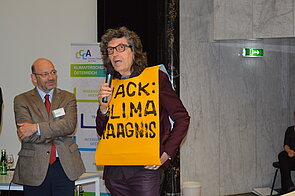
In the evening, Hermann Josef Hack's art installation reached both participants and passers-by in Salzburg's city centre: "Try to be balanced and connected", said Hack. "This apt motto should accompany our research work", commented Hartmut Graßl, a pioneer of climate research and adviser to the federal government, on the action. Participants circled the Mozart monument several times, experiencing for a moment what it feels like to be in balance with their neighbours. The day then came to a fitting close at the Stieglkeller, with regional delicacies, beer, and lively conversation.
On Wednesday, 25 April, more fascinating project results – ranging from comparative advantages in global energy trade to hydro-meteorological driving factors in the Austrian Alps – again found an engaged audience. Furthermore, in collaboration with co-organisers, the well-established Science–Schools Dialogue was implemented as a dedicated programme item. Pupils from Salzburg worked together with researchers to explore questions about the impacts of climate change in the Alps and to gain insights into the everyday life of researchers.
The CCCA Early Career Award went to Jakob Mayer (University of Graz) for his contribution on "Macroeconomic implications of switching to process-emission-free iron and steel production in Europe".
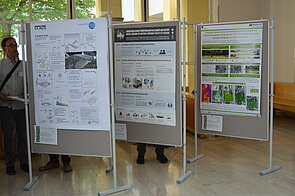
This year's poster prizes were awarded to Ivo Offenthaler for "Glade: How do changes in the quality of protection forests and extreme precipitation events affect vulnerability of infrastructure to landslides in the 21st century" (1st place), Junko Mochizuki for "Addressing Energy Transition Gaps in Climate and Energy Model Regions of Austria through Policy Co-Design" (2nd place), and Antonia Osberger for "Integrated Assessment of Urban Parks through Subjective Perception of Citizens and Remote Sensing with Consideration of Climate Aspects" (3rd place).
The 19th Austrian Climate Day was made possible through the support of the following organisations:
The 20th Austrian Climate Day will take place in Vienna next year – we're already looking forward to it!