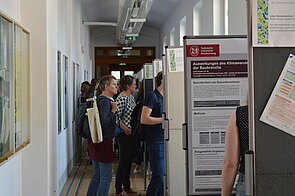


You can find the talks and posters from the scientific conference programme here.
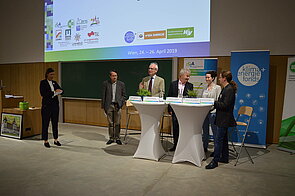
Under the motto "Facets of Austrian Climate Research", Austria's climate researchers gathered at the University of Natural Resources and Life Sciences Vienna and the Vienna University of Technology for their annual exchange.
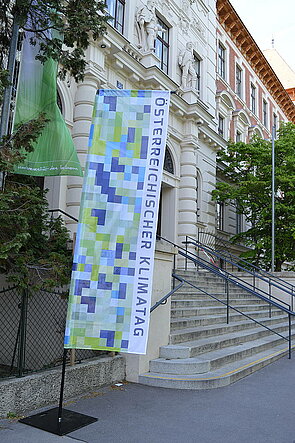
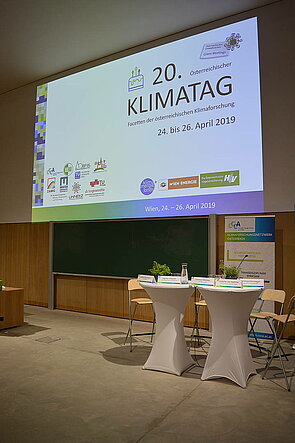
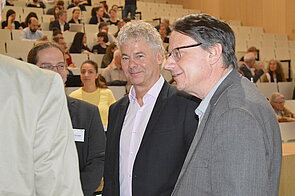
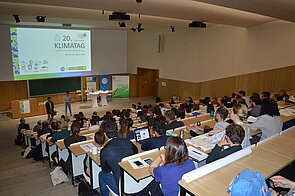
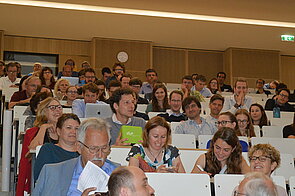
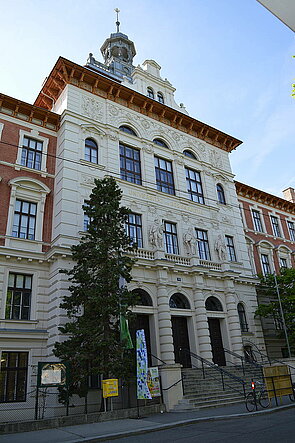
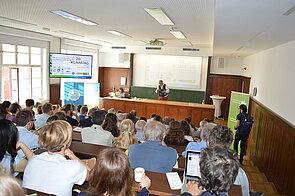
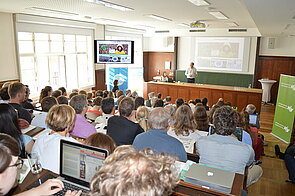
From 24 to 26 April, the colourful diversity of the Austrian climate research landscape came together under the roof of the Climate Change Centre Austria (CCCA) at the University of Natural Resources and Life Sciences Vienna (BOKU) and the Vienna University of Technology. The Klimatag, which this year celebrated its 20th anniversary, has grown into the most important networking event for the Austrian climate research community and promotes, among other things, exchange and dialogue between scientific and non-scientific groups. It is also the central showcase for all research activities in Austria funded by the Climate and Energy Fund within the framework of ACRP.
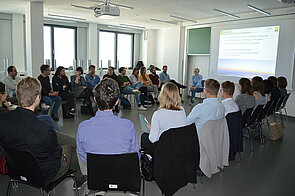
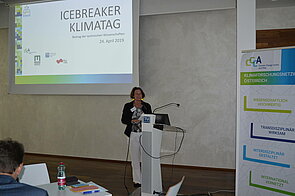
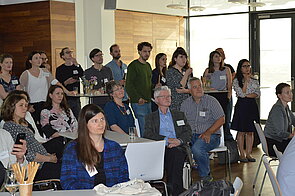
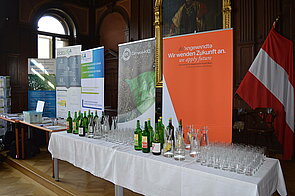
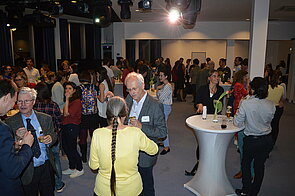
This year's Klimatag 2019 was once again opened with the so-called Icebreaker on Wednesday, 24 April. This was organised under the lead of the Research Centre for Energy and the Environment at TU Wien. Researchers from the TU Austria universities were given space to address various topics from the spectrum of engineering sciences and how these can help to counter climate change.
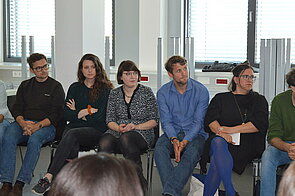
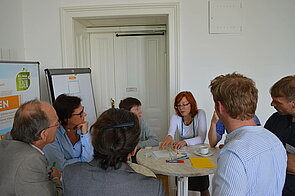
At the same time, this year again saw an networking meeting for early-career researchers on the afternoon of 24 April, which focused on scientific careers and alternatives to them. To this end, four speakers from the three areas of science, policy, and practice were invited to the this year's CCCA AG Nachwuchs Workshop to outline their professional career paths and discuss them with participants.
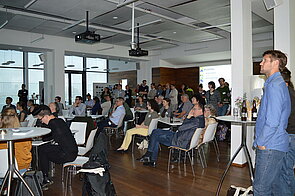
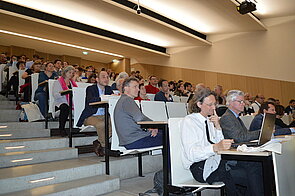
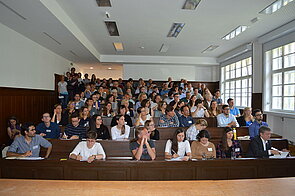
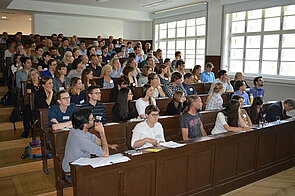
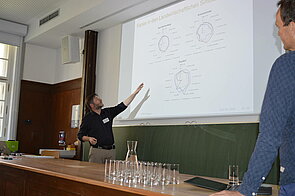
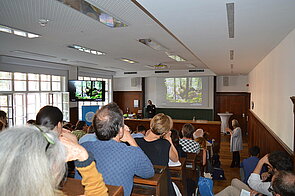
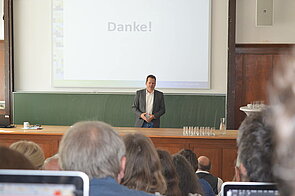
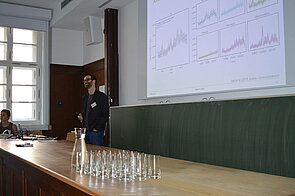
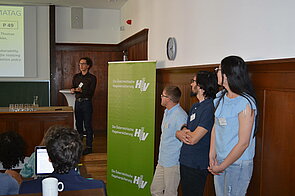
The following days were, as is traditional, dedicated to presenting the latest research findings from the past year, with around 70 talks and posters. In order to give all submissions to the scientific programme as much space as possible, a thematically clustered series of sessions was offered this year. The session series was designed to be interactive, similar to a workshop, and was open to all participants. This format allowed contributors to present their research results either as a talk or a poster to the full plenary audience.
There were five different scientific sessions in total. The session topics were: Transformation, Climate I Water I Snow, Climate Change Impacts, Agriculture and Forestry, and Climate Change Adaptation. These topics were examined from a range of disciplines. Talks were allocated 10 minutes of presentation time and 5 minutes for discussion. Posters were presented in so-called "poster flash talks" of 2 minutes each. Each session was accompanied by a suitably qualified moderator.
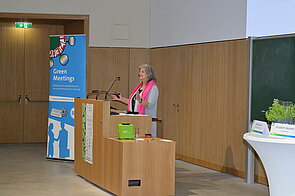
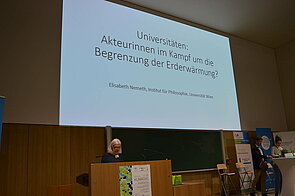
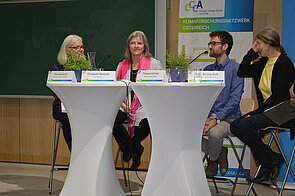
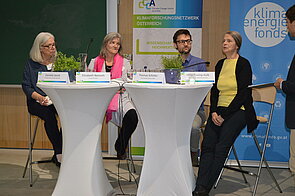
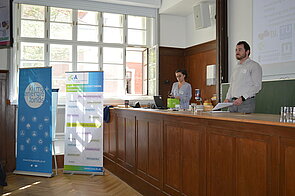
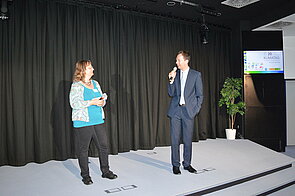
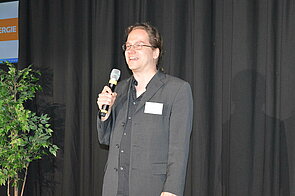
On Thursday, 25 April, following opening remarks from Gerhard Wotawa (CCCA Chair, ZAMG), Isabella Uhl-Hädicke (CCCA Deputy Chair, University of Salzburg), Hubert Hasenauer (BOKU Rector), Ingmar Höbarth (Climate and Energy Fund Managing Director) and Bernhard Kernegger (die Angewandte), the keynote took centre stage: "Out of the Comfort Zone! Science for Society?" followed by a panel discussion. Speakers included Daniela Jacob (Director of the Climate Service Center Germany – GERICS and Coordinating Lead Author of the IPCC Special Report on 1.5°C Global Warming) and Elisabeth Nemeth (Dean of the Faculty of Philosophy and Education at the University of Vienna until 2016). Also joining the panel were Helga Kromp-Kolb (Head of the Centre for Global Change and Sustainability at BOKU until 2018, climate researcher and author) and Thomas Schinko (Head of CCCA AG Nachwuchs and scientist in the Risk and Resilience programme at IIASA). The opening was moderated alongside Julia Kolar (CCCA) by Holger Heller (Heller Organizational & Management Consulting) and Isabella Uhl-Hädicke (CCCA Board, University of Salzburg).
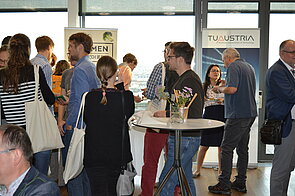
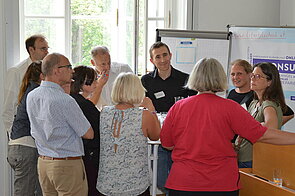
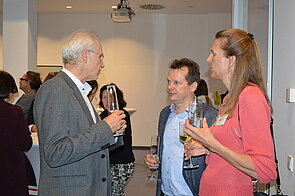
In this anniversary year, the focus was on interactive and participatory formats. Inter- and transdisciplinary processes were to be brought to the fore, enabling dialogue and discourse. For example, participants could get to know the keynote speakers at "Meet the Keynote" over an informal lunch and take the opportunity to exchange ideas.
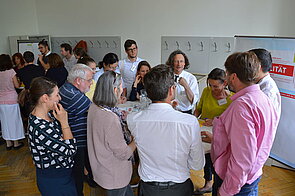
Another highlight of the 20th Austrian Klimatag was the workshop on networking between science and public administration on 25 April. This was organised by the Magistratsdirektion – Climate Protection Coordination of the City of Vienna on the topic of "Climate-Friendly Living". Profound changes in lifestyle are a prerequisite for achieving the goals of the Paris climate protection agreement. In this regard, the workshop raised awareness of the impact of individual decisions on the climate and highlighted options for climate-friendly lifestyles. Furthermore, the workshop connected the stakeholders working on climate protection and adaptation within and outside the Vienna city administration with the Austrian scientific community.
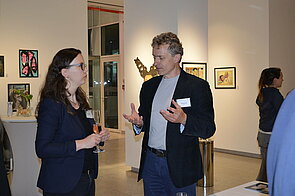
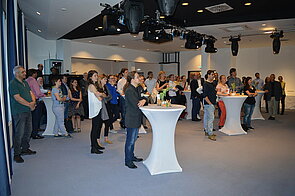
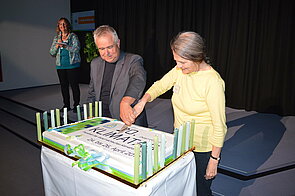
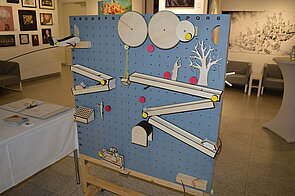
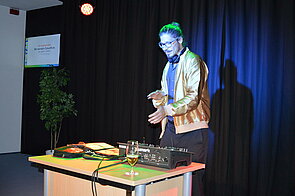
With the support of Wien Energie, who hosted the anniversary dinner — the Klimatag's "birthday party", so to speak — at the Kraftwerk Spittelau power station on the evening of 25 April, the first conference day drew to a close. Very much in the spirit of networking between science, art, and practice, artists were able to present themselves. The programme also gave participants the opportunity to look back over 19 Klimatags, take part in a guided tour of the Kraftwerk Spittelau, and dance to the music of DJ Marty McFly.
The second conference day, on Friday, 26 April, was opened by Herbert Formayer (Institute of Meteorology, BOKU & CCCA Board), Gernot Wörther (ACRP Programme Manager, Climate and Energy Fund) and Christine Fohler-Norek (Climate Protection Coordinator, Magistratsdirektion of the City of Vienna) with the presentation of the Austrian Climate Status Report 2018. This was followed by a keynote and discussion on the topic of "Climate Crisis or Catastrophe? Extreme Weather Events and How to Deal with Them" by Mario Winkler (Head of Communications, Die Österreichische Hagelversicherung) and Reinhard Mechler (IIASA – Deputy Programme Director Risk and Resilience, CCCA Board). Sabine Fuss (Head of the Working Group on Sustainable Resource Management and Global Change, Mercator Research Institute on Global Commons and Climate Change) provided moderation throughout the morning. This day too offered an impressive showcase of the breadth of current findings from Austrian research activities.
The conference concluded with the workshop "Landslide Risks: Historical Land Use and Climate Change" from the ACRP project ILLAS. The occasion for this was the fact that managing landslides in Austria — as a foreseeable impact of climate change — is becoming increasingly costly. However, little is known about the reasons for their occurrence and the influence of historical land use changes.
Awards
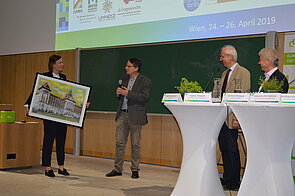
The CCCA Early Career Award (worth €1,000) was presented to Nina Knittel (University of Graz) for her contribution on the topic "The implications of climate change on Germany's foreign trade: A global analysis of heat-related labour productivity losses".
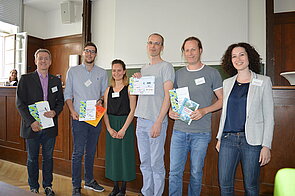
During the Klimatag, participants had the opportunity to rate the posters on display. On this basis, a jury awarded the poster prize. This year's jury consisted of Alexander Passer (TU Graz, CCCA Board), Marc Zebisch (EURAC) and Benedikt Becsi (BOKU). This year's poster prizes were awarded to the following posters:
1st place (worth €500): Sonja Völler – Poster no. 32, Tales of Tomorrow - Strengthening the climate science-policy-nexus: Knowledge brokering on climate science for young policy makers
2nd place (book: Mandl, Christoph E.: Managing Complexity in Social Systems. 2019.): Karin Hiltgartner – Poster no. 04, Klimaklagen als Mittel zur Erreichung der völkerrechtlichen Klimaschutzziele
3rd place (book: Schönwiese, Christian: Klimawandel kompakt. 2019.): Andreas Schindlbacher – Poster no. 39, FloodFlux – Treibhausgasflüsse in temperaten Auwädlern
Supporters
The 20th Austrian Klimatag was made possible with the support of the following institutions (listed alphabetically), whom we would like to warmly thank on behalf of the entire CCCA:
- Federal Research Centre for Forests
- Federal Ministry of Education, Science and Research
- Die Österreichische Hagelversicherung
- Climate and Energy Fund
- Climate Protection Programme of the City of Vienna
- Montanuniversität Leoben
- Graz University of Technology
- Vienna University of Technology
- University of Natural Resources and Life Sciences Vienna
- University of Applied Arts Vienna / UniNEtZ
- Wien Energie
- Central Institute for Meteorology and Geodynamics (ZAMG)